



Rose 32 Etudes on Clarinet: Articulation and Harmonic Awareness for Greater Expressiveness
Using Etude No. 1 from Rose's "32 Etudes"—a bible for clarinet players—as our subject, we explore key points for developing rich expressiveness. Packed with practical tips on articulation techniques and harmonic imagery, this article will help you achieve a more musical performance.
![[Saxophone] Bisbigliando and Color Trill: From Concept to Physical Experience of Microtonal Trills](https://i.vimeocdn.com/video/1845663551-4308c00da2ffb59e5ee320bb2e42d0cb539db79cd6926d003112046023b7957a-d_1280x720?&r=pad®ion=us)
[Saxophone] Bisbigliando and Color Trill: From Concept to Physical Experience of Microtonal Trills
In saxophone performance, many players are puzzled when they encounter the terms "bisbigliando" or "color trill" in contemporary music scores. These are microtonal trills, a special technique distinct from standard trills. This article begins with the concepts of bisbigliando and color trill, then explains how to physically experience and put them into practice, providing a comprehensive guide to mastering microtonal trills in saxophone performance.

Trumpet Vibrato: Concepts and Techniques for Creating a Natural Sound
Trumpet vibrato requires a proper understanding of its concepts and techniques to produce a natural sound. While unnatural vibrato can destabilize the tone, developing the right mental image and practicing effectively will help you master a natural vibrato that enriches your musical expression.

Mastering the Briccialdi Key on Flute: Dramatically Improve Upper Register Tone and Intonation with Alternate Fingerings
Have you ever struggled with fingers not keeping up, or intonation becoming unstable when connecting certain notes in the upper register of the flute? The solution lies in properly understanding and utilizing the Briccialdi key. This lesson provides a thorough explanation of alternate fingerings that allow you to breeze through phrases that are difficult with standard fingerings, as well as performance techniques that leverage the key mechanism. Learn to make the flute's structure work in your favor and aim for more advanced musical expression.

Percussion Tone Control: Nuanced Expression with Grace Notes
A detailed guide on distinguishing between the main "rich tone" and the "light tone" of grace notes. This lesson also covers the importance of stick position and preparatory movements to enhance your expressiveness.

Performance Anxiety on Horn: Building a Reliable Routine to Stay Focused, Knowing Everyone Feels the Same
No one has found a way to completely eliminate stage fright. That is why it helps to accept nervousness as normal and remind yourself that everyone around you is on the same playing field, reducing your psychological burden. On top of that, the awareness that 'you are the only one performing at this moment, so right now you are the best in the world' creates focus. This lesson organizes a mindset and preparation method that keeps you from being overwhelmed by nerves.

How to Refine the Ending of Notes on Horn
In horn playing, the way you end a note significantly affects your expressiveness. Rather than physically stopping the sound with your tongue or lips, it is important to leave a natural resonance. By approaching your performance with the idea that you have a set amount of breath that naturally diminishes and floats away, you can achieve a more beautiful note ending.
![[Flute] Breaking Out of a Rut with "Resistance" Training: Strengthening Your Tone Through Flutter Tonguing and Vocalization](https://i.vimeocdn.com/video/1872812330-d6647fd73afc56dd85f00985566754f19bcf827509e325356078b1c830dc28b7-d_1280x720?&r=pad®ion=us)
[Flute] Breaking Out of a Rut with "Resistance" Training: Strengthening Your Tone Through Flutter Tonguing and Vocalization
The flute is the only woodwind instrument that lacks the resistance provided by a reed or mouthpiece. While this ease of blowing is an advantage, it can also cause players to lose the core of their sound. In this article, we thoroughly explain how to use extended techniques such as flutter tonguing and singing while playing to engrain the ideal sense of abdominal engagement into your body. Breathe new life into your fundamental practice routine.
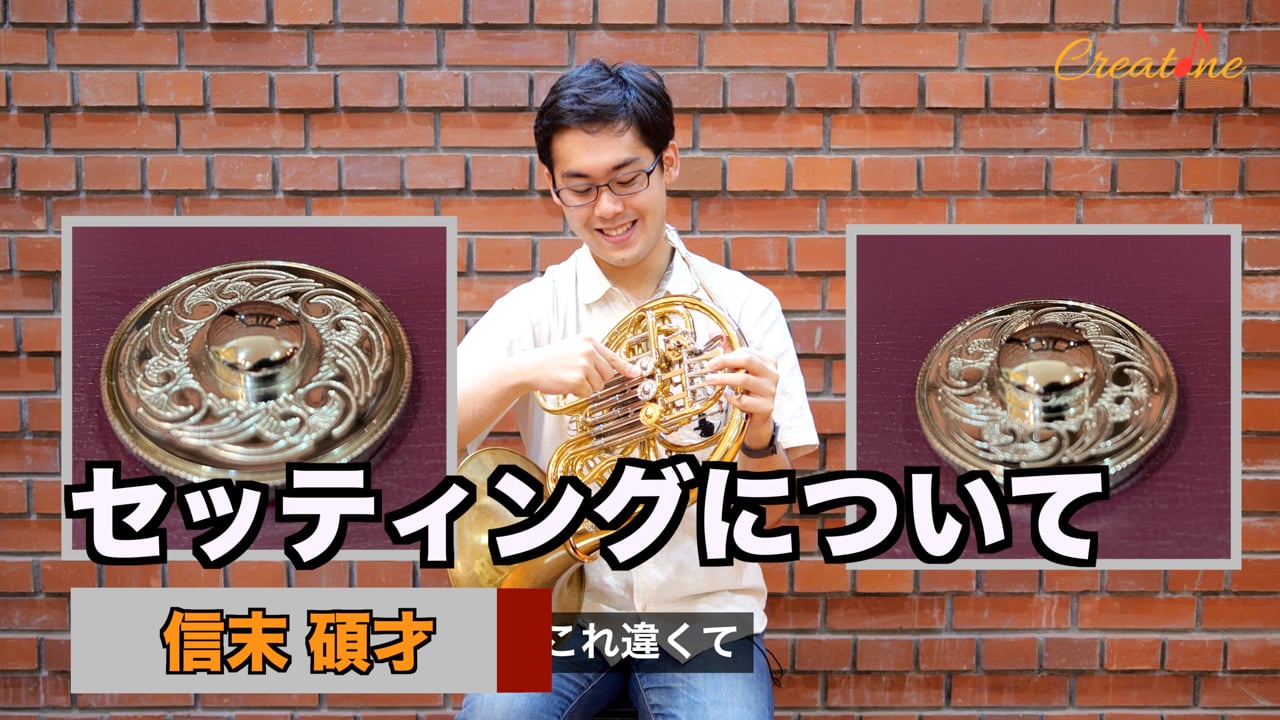
Optimizing Your Horn Setup: Choosing the Right Bell, Cap, and Mouthpiece Through Trial and Error
When setting up your horn, the choice of bell, cap, and mouthpiece is a critical factor that greatly influences tone quality and playability. The key to achieving your ideal tone lies in exploring different combinations through trial and error without being constrained by preconceptions. Maintaining an open-minded willingness to try things that interest you is important, and even detours become valuable experiences. This article compares poor and effective examples while explaining specific selection tips and practice steps for optimizing your horn setup.
![[Saxophone] Producing Beautiful Low Notes on Tenor Saxophone: Achieving Legato by Pressing the Tongue Tip Against the Lower Lip](https://i.vimeocdn.com/video/1845702544-13ee999931b15969e21b211c68a48694ae4c5af0abcdaefcf40e8e943fc25965-d_1280x720?&r=pad®ion=us)
[Saxophone] Producing Beautiful Low Notes on Tenor Saxophone: Achieving Legato by Pressing the Tongue Tip Against the Lower Lip
In tenor saxophone performance, connecting notes legato in the low register, especially below middle C, is a difficult challenge. Simply blowing air straight into the instrument tends to make upper overtones stand out or cause the tone to become rough from overblowing. This article explains how to achieve a soft, beautiful low tone by understanding and experiencing the technique of pressing the tongue tip against the lower lip when placing the mouthpiece in your mouth.
![[Saxophone] How to Approach Practicing a Piece: An Effective Practice Routine Focused on Phrasing, Explained in Q&A Format](https://i.vimeocdn.com/video/1845701876-5bb5e49ac95de1699a41f67fefb33f3fc5c416c65a509daab2ea1fe69deb9672-d_1280x720?&r=pad®ion=us)
[Saxophone] How to Approach Practicing a Piece: An Effective Practice Routine Focused on Phrasing, Explained in Q&A Format
When practicing a piece on the saxophone, whether it is a fast piece or a slow one, regardless of the tempo or character of the music, there are certain things I always do. First, I practice while checking the full score alongside my own part. What I look for in the score is not finger speed, but rather how to shape phrases with care. I think about which note each tone is moving toward, and how far that phrase continues. Even for pieces with fast passages, I always practice slowly — never fast. By practicing slowly, I can properly think about phrasing even in fast pieces, and my passages gradually become more stable. Additionally, I always pick out sections where intonation problems or overly fast vibrato occur due to embouchure issues, and I isolate those spots to correct the pitch or practice the vibrato separately. Practicing your weak points in detail and recording yourself to listen objectively is the shortest path to improvement. This article provides a detailed Q&A-format guide to effectively approaching piece practice on the saxophone.
![[Saxophone] Mastering Soft Attacks and Ornaments: A Q&A on Controlling Musical Tension](https://i.vimeocdn.com/video/1904746076-c33f9796155034527a40d79681c41a03517b4b1596aa4a51b1dbb1bc6c637bb9-d_640x360?&r=pad®ion=us)
[Saxophone] Mastering Soft Attacks and Ornaments: A Q&A on Controlling Musical Tension
Attacking at **piano** in the low register of the **saxophone** and executing delicate turns are moments that demand great care from the player. This article offers a detailed Q&A covering everything from relaxed, sigh-like tone production to smooth fingering using side keys, and how to approach accents.
Clarinet Adagio Technique: Learning Tempo and Phrasing from Rose 32 Etudes No. 5, Part 1
In clarinet adagio performance, tempo selection and phrasing determine the quality of expression. Precisely because the tempo is slow, it is important to maintain long phrasing and play thirty-second notes and sextuplets expressively. This article explains how to enhance your clarinet expressiveness by understanding the true meaning of adagio and applying appropriate tempo settings and phrasing awareness.
![[Flute] Proper Tuning and Intonation Control: From Concept to Practice for Achieving Beautiful Resonance](https://i.vimeocdn.com/video/1872810027-1b3ef0708dda31990430deb243688af8c8d6ef68915e441893b5fad2399c6ec1-d_1280x720?&r=pad®ion=us)
[Flute] Proper Tuning and Intonation Control: From Concept to Practice for Achieving Beautiful Resonance
In flute performance, many players face issues such as being unable to tune properly or maintain stable intonation. Proper tuning and intonation control are not merely theoretical concepts; they can only be truly mastered through physical experience and practice. This article begins with the concept of proper tuning and intonation control, then explains how to experience it physically and put it into practice, offering methods to improve pitch management in flute performance.

Saxophone Embouchure: The Correct Approach for Achieving a Soft Tone
The saxophone is an instrument that produces sound easily with any embouchure when you first blow into it. However, developing a correct embouchure is essential for producing a soft tone. This article provides a detailed comparison of common embouchure mistakes and correct embouchure technique, covering upper and lower teeth positioning, corner placement, air speed and focus, and tongue position, along with specific methods for achieving a soft tone.
![[Bassoon] The Ideal and Reality of Double Tonguing: Articulation Techniques for Preserving Tone Quality](https://i.vimeocdn.com/video/1845674137-78ab604d3220b002884f7ce8722336df2684e8d28c2dd1301a368da96df788cf-d_1280x720?&r=pad®ion=us)
[Bassoon] The Ideal and Reality of Double Tonguing: Articulation Techniques for Preserving Tone Quality
Double tonguing on the bassoon is not merely a pursuit of speed, but a technique for articulating the airstream while maintaining tone quality. From throat-based "goh-goh" exercises to the concept of projecting air from deep in the abdomen, this article outlines practical steps for mastering the technique.

Mastering the Bassoon High Register: The Connection Between Beautiful Tone Production and Embouchure
Many bassoonists struggle with tone production in the high register, especially at soft dynamics. This article explains the "zero-start" technique for achieving a smooth, clarinet-like tone onset. Through a Q&A format, we explore the proper breath preparation and the embouchure principles that support it, revealing the secrets to beautifully performing challenging passages such as those found in Weber's concerto.

The Ideal Bassoon Embouchure: Developing a Round, Rich Tone Through Lip Shape and Reed Depth
The bassoon's tone can change dramatically with even the slightest adjustment to the embouchure. This comprehensive guide covers the optimal depth for placing the reed, lip positioning adjustments for different registers, and an innovative practice method using Japanese vowel imagery. Complete with self-check points using a mirror, this article shows you the shortest path to your ideal sound. Achieve stable articulation and a rich, resonant tone.

Breathing for Clarinet: How Your Inhale and Exhale Shape 90% of Your Sound
The quality of your clarinet playing is largely determined by how you breathe -- how you inhale and exhale. When you inhale correctly and exhale correctly, your articulation and tone become more consistent. This lesson revisits breathing from the fundamentals and organizes the concepts behind building solid air support.

Horn Fundamentals: Mastering Harmonic Connections Through Lip Slurs and Scales
Lip slurs are at the very core of horn playing. Understanding the harmonic series and developing the technique of switching notes solely through air speed control forms the foundation of all melodic performance. By combining lip slurs with scale exercises, you can minimize tonal inconsistencies across registers and achieve an even, resonant sound throughout your entire range. This lesson covers specific practice routines and key points to help you get there.
