


Trombone Slide Technique: Mastering the Timing Between Slide Movement and Tonguing
When playing the trombone, if the slide moves too slowly, unwanted glissandos (smooth pitch changes) occur between notes, resulting in a sloppy sound. This article covers the essentials of trombone slide technique: timing the slide to move instantly at the moment of tonguing, the push-and-catch motion using your thumb and index/middle fingers, and improving accuracy through scale practice.
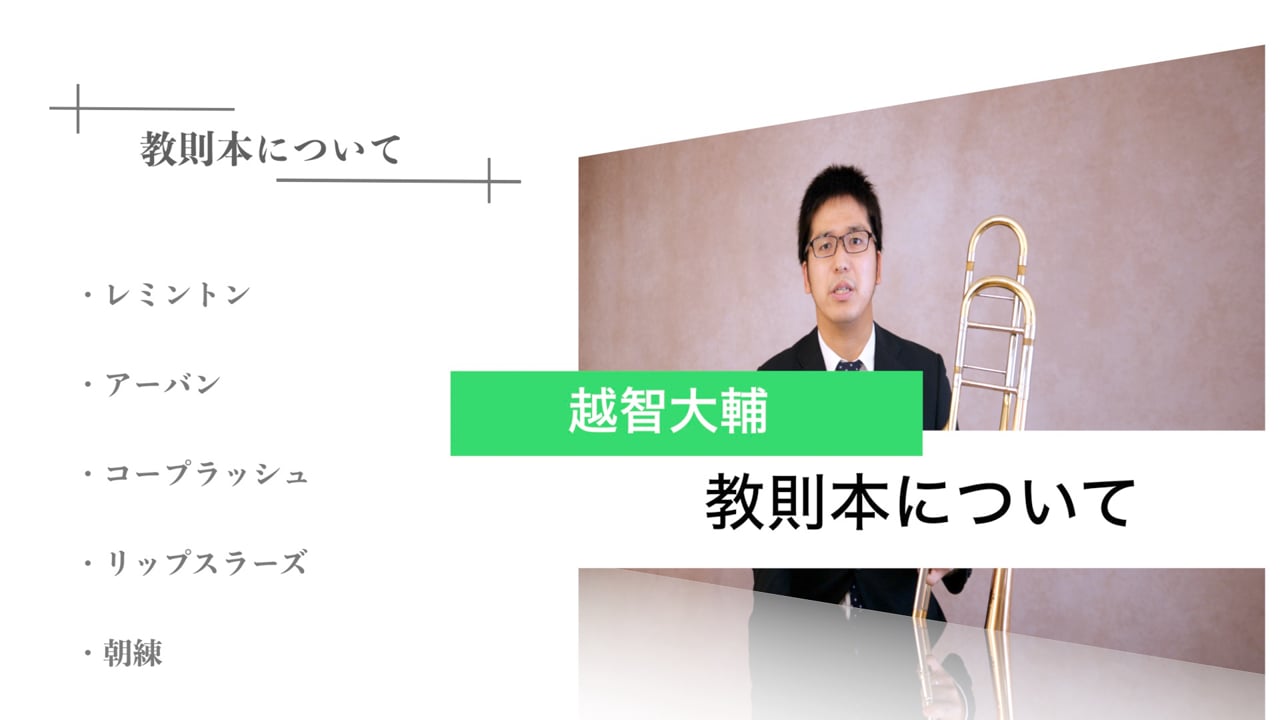
How to Use Trombone Method Books: Master the Fundamentals by Practicing One Book in Depth
In trombone practice, effectively using method books is essential for building a solid foundation. Rather than working through multiple method books simultaneously, choosing one book suited to your level and practicing it deeply and thoroughly allows you to improve your trombone technique and tone. By understanding the characteristics of each method book—such as Remington, Arban, and Kopprasch—and practicing one book daily for at least two weeks, you can build a solid foundation. This guide explains specific practice steps for effectively using trombone method books, comparing examples of what to do and what not to do.

The Complete Tuba Warm-Up Manual: A Ritual to Transform Your Body into a Resonating Instrument
Your morning warm-up determines the quality of your playing for the entire day. This thorough guide covers the essential routines and weekly plans practiced by professional players to gently open up the body and achieve the most efficient, resonant tuba sound. Build the foundation for a rich, powerful tone.

Achieving Smooth Tonguing on Saxophone: Stabilizing Your Airflow with a Slur-Like Mindset
The key to effective saxophone tonguing practice is stabilizing your airflow as if playing a slur. Learn how to achieve smooth, connected articulation by maintaining proper abdominal support.

Clarinet Tonguing Basics: Finding the Ideal Tongue Position and Mastering Soft Articulation
In **clarinet** performance, tonguing is an extremely important technique that determines the quality of note attacks. This article provides a detailed guide covering the analysis of tongue placement—which varies from player to player—a soft approach to the reed, and a step-by-step training program using a metronome.
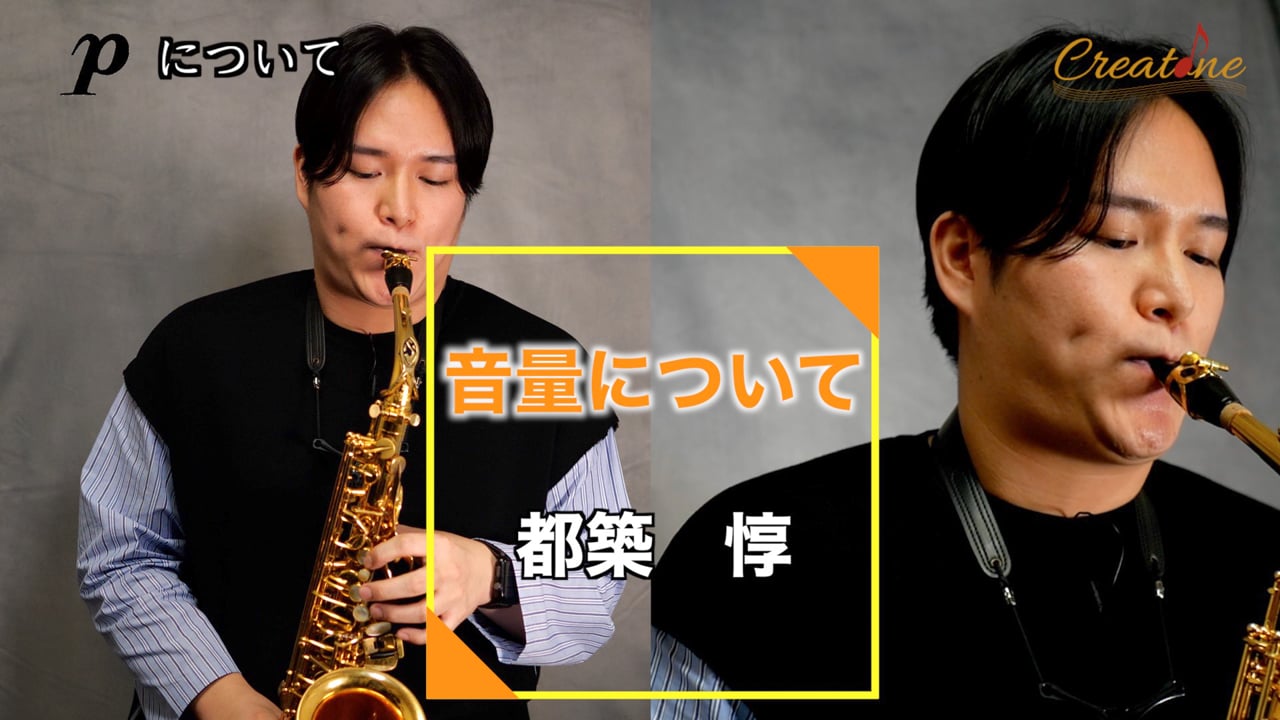
Why You Fail at Saxophone Volume Control! Causes and Solutions for Lifeless Piano and Crushed Forte
Volume control on the saxophone is a fundamental element of musical expression. Yet many players struggle with issues like their piano sounding shrunken and lifeless, or biting down on the embouchure during forte. This article compares common mistakes and correct approaches for both piano and forte, offering a detailed guide to proper volume control through understanding air speed and embouchure shape.
![[Saxophone] Delicate Soft Dynamics in the Low Register: Refining Tone with Subtone and Bell Techniques](https://i.vimeocdn.com/video/1845342430-8ecb60242b59f430155e9f9ed313b0efa14b578f16df965c28ce49a066036249-d_1280x720?&r=pad®ion=us)
[Saxophone] Delicate Soft Dynamics in the Low Register: Refining Tone with Subtone and Bell Techniques
Producing delicate soft dynamics (pianissimo) in the low register of the saxophone is a challenging task for many players. This article explains a practical method for achieving low-register pianissimo by combining a posture where the bell is placed between the knees with a subtone embouchure. By understanding how to adjust the embouchure by floating the lower teeth away from the reed and how changes in bell angle affect tone color, you can produce more refined and expressive low notes.

Orchestral Excerpt for Horn (Bruckner Symphony No. 4, 1st Movement): Tone Over Volume — Standing as the Protagonist from the First Note
The opening of the 1st movement of Bruckner's Symphony No. 4 "Romantic" features a major horn solo, where tone quality and control matter far more than volume. While the conventional wisdom says the horn should play mezzo forte even when the strings are at pianissimo, in practice piano is sometimes requested. In auditions, a "controlled tone" becomes your strongest asset. This lesson covers projecting the image of a protagonist standing on the open plain, shaping tone by adjusting the right hand to eliminate the attack point, and designing a slightly slower tempo.
![[Saxophone] How to Improve Long Tones: Eliminating Pitch Wavering and Achieving a Stable Tone](https://i.vimeocdn.com/video/1845679683-b06aaa7cfd581ebe0e621b0a9724159d2164d227c0b228ad55202d788a77087e-d_1280x720?&r=pad®ion=us)
[Saxophone] How to Improve Long Tones: Eliminating Pitch Wavering and Achieving a Stable Tone
In saxophone performance, long tones are a crucial foundational exercise. However, many players face problems such as pitch wavering, unstable tone quality, and a lack of noticeable progress. This article provides a detailed explanation of the causes of pitch wavering during long tones and specific correction methods for achieving a stable tone.
![[Oboe] Mastering Reed Embouchure: Balancing Upper and Lower Lip Pressure for Better Control](https://i.vimeocdn.com/video/1845714806-f7492cee292ecf0401798b3a4db75594f1a08a278e8d41b93647c2d090cb2a8f-d_1280x720?&r=pad®ion=us)
[Oboe] Mastering Reed Embouchure: Balancing Upper and Lower Lip Pressure for Better Control
In oboe performance, how you grip the reed is a crucial element that determines tone and control. By balancing upper and lower lip pressure and gripping the reed correctly, you can achieve a performance that is easier to control. This lesson explains specific steps for mastering oboe reed embouchure, comparing common mistakes with proper technique.

How to Place the Horn Mouthpiece: The Importance of 'Einsetzen' — Getting Both Lips Fully Inside the Rim
Mouthpiece placement is the foundation of horn playing. Many method books prescribe a ratio of 'upper 2/3, lower 1/3,' but what truly matters is not the ratio — it is ensuring that both the upper and lower lips are fully contained within the mouthpiece rim. This approach, known in German as Einsetzen, is the key to covering the horn's vast range on a single instrument. Here we outline the essential criteria that every player and teacher should know.

Making Bassoon Scale Practice More Efficient: How to Coordinate Thumb and Tongue Movement by Using Detailed Articulation
In bassoon scale practice, adopting efficient practice methods is essential for making the most of limited individual practice time. While connecting all notes with a single slur is not entirely without merit, adding detailed articulations and connecting notes in pairs of two with slurs allows you to quickly coordinate fine finger and tongue movements. By practicing with the specific goal of coordinating thumb and tongue movement unique to the bassoon, you can achieve more effective results. This lesson explains specific practice steps to make your bassoon scale practice more efficient, comparing poor and good examples.
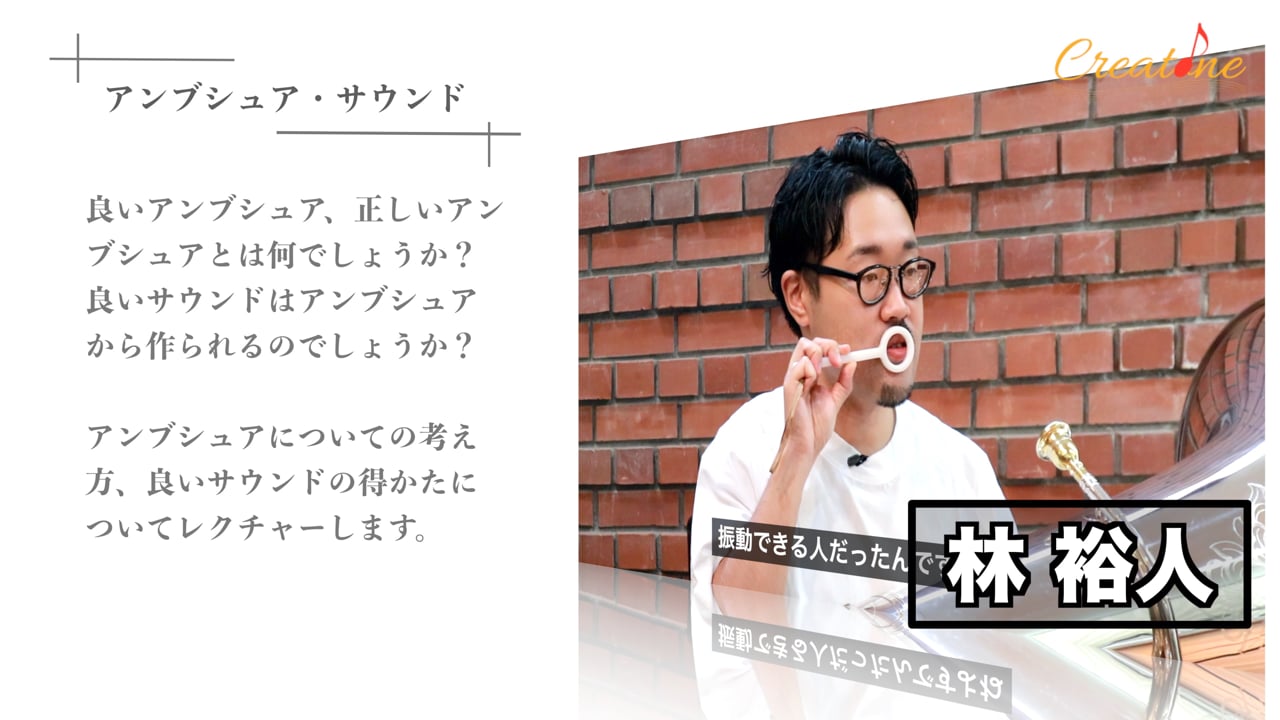
The Embouchure Behind an Ideal Tuba Tone: Building Your Lip Setting with a Sound-First Approach
In tuba playing, the most important factor is your mental image of the sound you want to produce. Many players tend to obsess over the "shape" of their embouchure, but a truly correct embouchure is simply the state that produces a good sound. This article provides a detailed explanation of specific approaches to eliminating unnecessary tension in the lips and efficiently vibrating air within the mouthpiece, along with key checkpoints to keep in mind during daily practice.
![[Flute] Enjoying Ensemble Playing: Your Role in Ensembles and How to Give Cues](https://i.vimeocdn.com/video/1872810385-8dfee7e003c713f56deb8406a2b500247f5c9248224b5b7d505939d84189efc9-d_1280x720?&r=pad®ion=us)
[Flute] Enjoying Ensemble Playing: Your Role in Ensembles and How to Give Cues
To fully enjoy the flute, ensemble playing is just as essential as solo performance. By taking on inner voices and bass parts in various formats such as piano accompaniment, flute ensembles, and woodwind quintets, you develop an understanding of tempo maintenance and the richness of harmony. Because the flute occupies the highest register, it carries the important role of giving cues (Einsatz) to the group. This article provides a detailed guide on how to enjoy ensemble playing and how to practice giving cues effectively.
![[Euphonium] Understanding the Importance of Pitch Sequences: From the Concepts of Pitch Height and Gravity to Physical Sensation](https://i.vimeocdn.com/video/1845690440-a409589d9df24231458a4ecbc047d894745613a3d36641d5bc4ff334623d897f-d_1280x720?&r=pad®ion=us)
[Euphonium] Understanding the Importance of Pitch Sequences: From the Concepts of Pitch Height and Gravity to Physical Sensation
In euphonium performance, how you perceive pitch sequences (the arrangement of notes) dramatically changes your expression. Even when individual notes carry little meaning on their own, a series of notes creates directionality and energy. Using the distinctions between stepwise and leap motion, and the concepts of pitch "height" and "gravity" as guides, we organize how to approach pitch sequences as a physical sensation.

Flute Finger Placement and Relaxation: Mastering Body Mechanics for Smooth Fingering
For flutists, finger relaxation is a crucial element that directly affects not only fast passage execution but also tonal stability. This article thoroughly explains proper finger placement and relaxation methods based on the body's natural structure. By shifting from "pressing" the keys to "resting" on them, build the foundation for drawing out the flute's fullest resonance.

The Art of Flute Vibrato: Achieving Harmony in Ensembles and Bringing Brilliance to Your Tone
Vibrato adds brilliance to flute performance. However, in ensemble settings, the quality and speed of your vibrato can sometimes disrupt the overall harmony. This lesson explains how vibrato affects intonation and provides specific control techniques for blending your tone with those around you. Learn refined vibrato techniques that work in both solo and ensemble contexts.

Essential Flute Care Tips for a Lifetime! Daily Maintenance and Troubleshooting
A thorough guide to indispensable flute care for every player. Learn daily internal cleaning, exterior polishing, material-specific considerations, and how to self-diagnose when you suspect something may be wrong with your instrument.

Euphonium Breathing Techniques 2: How to Apply Natural Breathing to Your Playing
In euphonium playing, it is important to utilize natural breathing rather than a special breathing technique designed for the instrument. By being aware of your relationship with the surrounding space and overriding habits such as raising your shoulders or over-engaging your abdominal muscles through the regular practice of natural breathing, you can produce more natural and expressive sounds.
![[Bassoon] Mastering Tonguing: Articulation Techniques That Preserve Your Sound](https://i.vimeocdn.com/video/1845673506-ca69bd78cbc2528f0186647f58767798fba1a0c71faa48c0795348337539f4a3-d_1280x720?&r=pad®ion=us)
[Bassoon] Mastering Tonguing: Articulation Techniques That Preserve Your Sound
Many bassoonists struggle with tonguing, but the solution lies not in tongue strength but in your "mental image of airflow." This lesson covers everything from how to seal the reed to specific techniques for maintaining a full sound even in fast passages.