



![[Saxophone] Enhancing Articulation Clarity: The Secret of Air Speed and the "Tongue-Assisted" Approach](https://i.vimeocdn.com/video/1845665116-a53403b50a10b3e06df7576ab43601026cc18f1087777aa71c080cd2ade54b43-d_1280x720?&r=pad®ion=us)
[Saxophone] Enhancing Articulation Clarity: The Secret of Air Speed and the "Tongue-Assisted" Approach
Are you struggling with delayed articulation when tonguing or muddiness in your note endings (releases)? Learn how to increase the initial speed of your airstream, along with embouchure techniques for sustaining a clean, clear tone all the way to the end of each note.
![[Saxophone] Projecting the Upper Register: Redirecting Airflow with Tongue Position and a Bite-Free Embouchure](https://i.vimeocdn.com/video/1845659804-d568d49a021f6ee62b48089128633e1a52ad3d065e31854c863d2378d49ac314-d_1280x720?&r=pad®ion=us)
[Saxophone] Projecting the Upper Register: Redirecting Airflow with Tongue Position and a Bite-Free Embouchure
To produce a beautiful tone in the saxophone's upper register, the most important thing is to avoid biting the reed too hard. For many players, a pinched or choked sound in the upper register is caused by excessive reed pressure. By adjusting tongue position to redirect airflow, you can unlock the distinctive resonance of the upper register. This article provides a detailed Q&A-format guide covering techniques for a bite-free embouchure, the relationship between tongue position and airflow direction, and practical methods for projecting the upper register.

Dramatically Improve Your Saxophone Vibrato! Practical Techniques for Mastering Range, Speed, and Dynamics
Saxophone vibrato is an essential technique that can be applied in a wide variety of musical contexts. Whether playing softly or loudly, with fast or slow oscillations, you should utilize vibrato across all situations. Rather than practicing at a fixed dynamic level and wave speed, incorporate variations into your vibrato practice. This article provides a detailed Q&A guide covering practice methods that expand your range starting from a single note, techniques for varying wave speed and dynamics, and tips for stabilizing your embouchure.
![[Saxophone] Body Mechanics: Posture and Center of Gravity for Seated and Standing Performance](https://i.vimeocdn.com/video/1845701082-1573bf98fafe2e2ffbd50147174f0672f9d4624cdca9f03ed264a1b14f442828-d_1280x720?&r=pad®ion=us)
[Saxophone] Body Mechanics: Posture and Center of Gravity for Seated and Standing Performance
In saxophone performance, body mechanics greatly affect tone quality and expressiveness. When seated, it is important to support your center of gravity with your lower body and place one foot forward for balance. For tenor and baritone saxophones, angling the chair slightly to the left and sitting on the edge prevents the instrument from colliding with the chair and makes it easier to maintain balance. When standing, be mindful of bell direction and adjust your posture so the bell faces straight toward the audience.
![[Saxophone] Mastering Articulation and Tonguing: Tips for Clear Attacks by Contacting the Tip of the Reed](https://i.vimeocdn.com/video/1845698695-76c837a33c3ca9aac71f6c88db4fc303101b3614597e4cae5e84a92801706775-d_1280x720?&r=pad®ion=us)
[Saxophone] Mastering Articulation and Tonguing: Tips for Clear Attacks by Contacting the Tip of the Reed
Articulation on the saxophone is the first sound that defines your musical impression. When tonguing, if the tongue contacts the reed surface over too broad an area, the sound becomes rough, producing an unclean attack. On the other hand, if the tongue does not contact the reed sufficiently, the articulation becomes vague and the music starts ambiguously. The ideal approach is to touch the tongue near the tip of the reed to achieve a clear, unaffected attack. It is important not to pull the tongue too far back, and to make contact as close to the resting position as possible with minimal movement. This article provides a detailed Q&A-style guide on how to optimize tongue position, reed contact point, and movement distance for saxophone tonguing.

Articulation Techniques for Producing Beautiful Low Notes on the Saxophone
Many saxophonists find the low register difficult to play, but by refining your breath control and tonguing timing, you can produce beautiful, resonant low notes. By learning to blow with a focused airstream and mastering a tonguing technique where the tongue is placed on the reed before release, you can achieve a soft, smooth attack in the low register.
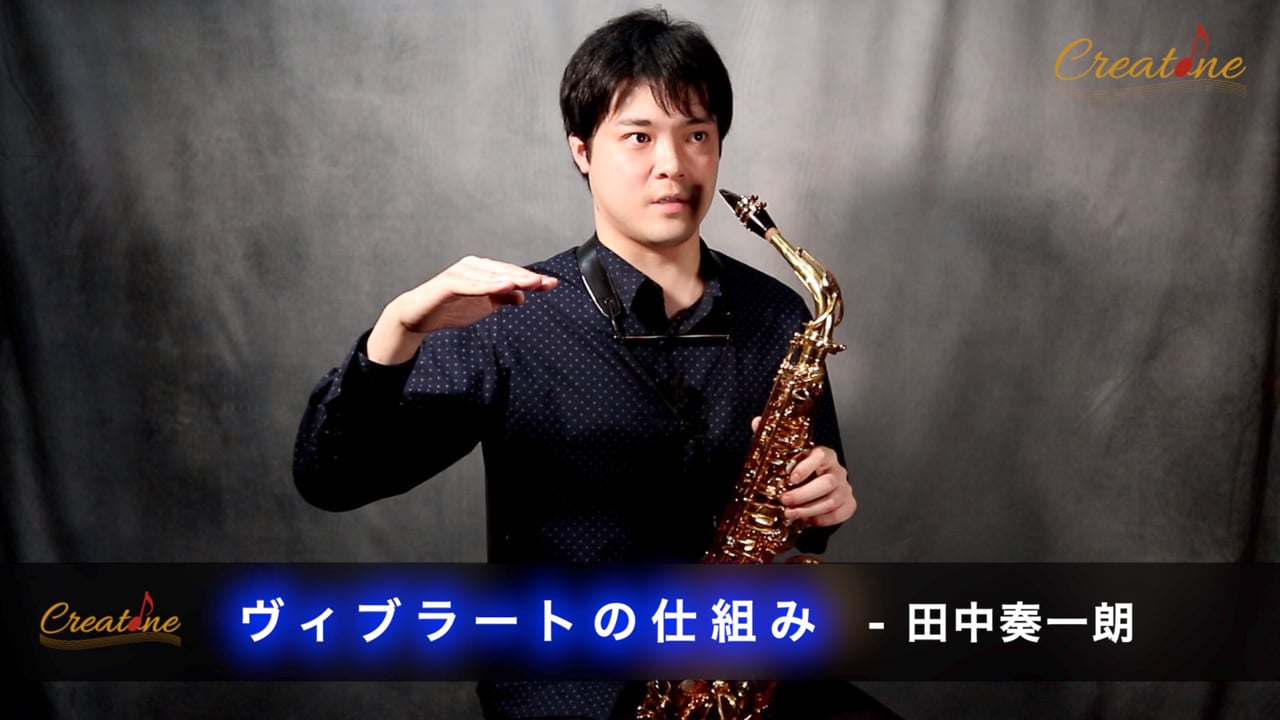
Applying Vibrato Correctly on Saxophone: Creating Compact Waves Using the Lower Lip Muscles
The key to saxophone vibrato is using the lower lip muscles rather than the jaw. This lesson explains how to play with the image of vibrato lines flowing within the round resonance of a beautiful tone.
![[Saxophone] Embouchure and Breath Control for Producing Clean Altissimo Notes](https://i.vimeocdn.com/video/1845701482-bcf6a06b1038345201818daacca3d88e256766479f0415282e79dffa3179fc95-d_1280x720?&r=pad®ion=us)
[Saxophone] Embouchure and Breath Control for Producing Clean Altissimo Notes
Altissimo is an essential technique for producing notes in the upper register of the saxophone. However, many players tend to squeeze with their embouchure, resulting in improper mouth shapes such as an "ee" or "oh" formation. The key to producing clean altissimo notes lies in using the "hee" syllable to create tension in the mouth corners and playing with a thin airstream and a falsetto-like approach. This article provides a detailed explanation of the proper embouchure and breath control methods for altissimo.
![[Saxophone] Tone Development Training: Effective Practice Methods Starting from a Reference Note](https://i.vimeocdn.com/video/1845659499-1ce24a67142d95ed6639ba082d87b613057e6c665b4ce065b313988ebad7d077-d_1280x720?&r=pad®ion=us)
[Saxophone] Tone Development Training: Effective Practice Methods Starting from a Reference Note
Developing saxophone tone is generally done through long tone practice, but simply continuing long tones alone can make tone development quite challenging. As you practice, there is surely a note across all registers that you feel sounds the best or that you like the most. An effective approach is to use that note as your reference and practice long tones moving up and down from it. Additionally, the saxophone is divided into several registers, and the tone color changes slightly across each range. This article provides a detailed Q&A explanation of how to find a reference note and unify your tone, understand tonal differences across registers, and practice long tones effectively.
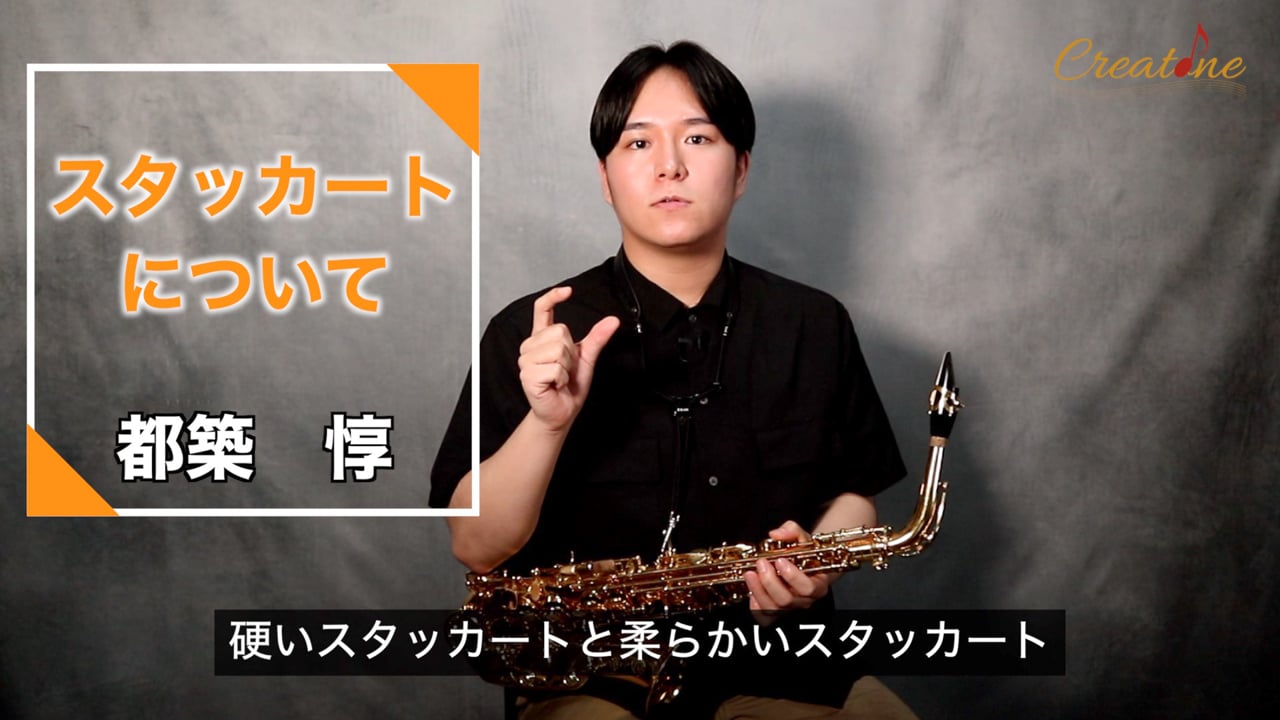
Saxophone Staccato: Two Types of Techniques and Breath Control
Expanding your expressive range on the saxophone involves mastering two types of staccato: clear, crisp staccato and soft staccato. By correctly controlling the continuity of your airflow, tongue technique, and air speed, you can achieve staccato suited to the musical context.

Mastering Double Tonguing on Saxophone: The Art of Articulation Without Sacrificing Tone
Double tonguing is an essential technique for navigating fast passages on the saxophone. Learn the tongue mechanics and practice steps for achieving clear articulation without compromising your tone quality.
![[Saxophone] Mindset and Preparation Strategies for Achieving Results in Competitions](https://i.vimeocdn.com/video/1845661843-ce2e18547690564da789913d7fce7733e0a34dff02c9a5a3fa31ff4bcfa76522-d_1280x720?&r=pad®ion=us)
[Saxophone] Mindset and Preparation Strategies for Achieving Results in Competitions
A detailed guide on the mindset needed to aim for the top in saxophone competitions, how to build an efficient practice plan, and how to turn performance-day nerves into an advantage.
![[Saxophone] Eliminating Tone Unevenness with Long Tones: Achieving Consistent Tone Quality Through Air Speed Control](https://i.vimeocdn.com/video/1845698438-1e6a5857a33d3fec49207e49950ee843915d999b23c1c5040e80cdda1fc996a5-d_1280x720?&r=pad®ion=us)
[Saxophone] Eliminating Tone Unevenness with Long Tones: Achieving Consistent Tone Quality Through Air Speed Control
Long tones on the saxophone don't need to take a long time. What matters is using long tones to refine the tone of notes you're concerned about. Tone unevenness tends to occur especially when transitioning from C (without the octave key) to D (with the octave key). By increasing air speed when moving from C to D and easing it when descending from D to C, you can eliminate this unevenness. This article explains effective long-tone practice methods, air speed control, and techniques for achieving unified tone across two octaves in a detailed Q&A format.
![[Saxophone] Mastering Articulation: Correct Staccato and Accent Technique](https://i.vimeocdn.com/video/1845700909-81ca643fc30ce59ed1be86008cb616901796a4425c8bd2e1743a22f5bd936e99-d_1280x720?&r=pad®ion=us)
[Saxophone] Mastering Articulation: Correct Staccato and Accent Technique
Musical scores are filled with small dots and wedge-shaped symbols above notes — these are called articulations. For saxophone players, staccato in particular is one of the more difficult articulations. Rather than uniformly playing staccato short, it is important to vary the length according to the musical character. For fast tempos, cut short; for slower, lyrical passages, play longer with a softer texture. Accents should not be played with the tongue alone, as this crushes the saxophone's soft resonance — using air together with the tongue preserves the sound. This article explains correct staccato and accent technique in Q&A format.
![[Saxophone] Mastering the Fundamentals of Tonguing: Checkpoints for Keeping the Throat Still and Maintaining Continuous Airflow](https://i.vimeocdn.com/video/1845660218-56b313d69a8c0bb988c17bf07ca71dabbf643de2dd7fb0da42a8bfc0fc778cc9-d_1280x720?&r=pad®ion=us)
[Saxophone] Mastering the Fundamentals of Tonguing: Checkpoints for Keeping the Throat Still and Maintaining Continuous Airflow
Tonguing on the saxophone is a crucial technique that determines the clarity and stability of your sound. Many players tend to move their throat while tonguing or let their tongue stroke become too long. Additionally, if the tongue position is not correct, the sound becomes unclear or the airflow stops. This article provides a detailed guide to the four essential points for mastering the fundamentals of tonguing: keeping the throat still, shortening the tongue stroke, maintaining proper tongue position, and sustaining continuous airflow, with specific checkpoints and practical steps.
![[Saxophone] Mastering Thumb Position: Left Thumb Technique for Baritone Saxophone](https://i.vimeocdn.com/video/1845681662-9938289a84c98440def2ccd7012083b1698d4dffbe11f1342f0f331f823d52d8-d_1280x720?&r=pad®ion=us)
[Saxophone] Mastering Thumb Position: Left Thumb Technique for Baritone Saxophone
In saxophone performance, the left thumb position is a crucial element that forms the foundation of stable playing. Baritone saxophone in particular requires unique techniques, from the basic position of supporting the octave key table with the pad of the thumb at the first joint, to thumb movement methods when operating low register keys. This article provides a detailed Q&A explanation of correct thumb positioning, thumb movement when operating the octave key, and thumb movement methods when operating low register keys.
![[Saxophone] The Art of Reed Management and Adjustment: A Routine for Maintaining Your Ideal Tone](https://i.vimeocdn.com/video/1845661494-0c123e36bf867578a859ca9c094aa2c52b6ec8409dff572aa0271c5da2c17156-d_1280x720?&r=pad®ion=us)
[Saxophone] The Art of Reed Management and Adjustment: A Routine for Maintaining Your Ideal Tone
In saxophone playing, the condition of your reed directly affects your tone and playing feel. How should you evaluate all 10 reeds in a new box? How do you adjust them with a ReedGeek, and when is the optimal time to replace them? This article provides a detailed guide to reed management techniques for maintaining your ideal sound.
![[Saxophone] Tone Endings: Checkpoints for Achieving Natural Release](https://i.vimeocdn.com/video/1845699447-367457adba3e5fe11fa32b9aea4d831b4454c1256d1f5009ca349566fc73bb0e-d_1280x720?&r=pad®ion=us)
[Saxophone] Tone Endings: Checkpoints for Achieving Natural Release
When ending notes on the saxophone, many players stop the sound with their tongue, resulting in an unnatural and harsh cutoff. By naturally fading out with your airstream, you can achieve a beautiful and natural tone release. This article provides detailed checkpoints for controlling your tone endings and practical steps for developing a natural release technique.

Trumpet Mouthpiece Practice: Effective Methods to Improve Tone Quality and Range
Trumpet mouthpiece practice is ideal for checking your physical condition each day. Since the mouthpiece has no bell, shaping your tone can be difficult, but visualizing an invisible bell can improve your sound. By focusing on key points such as keeping the oral cavity narrow, increasing air speed, and drawing the lips toward the center, you can improve both tone quality and range.
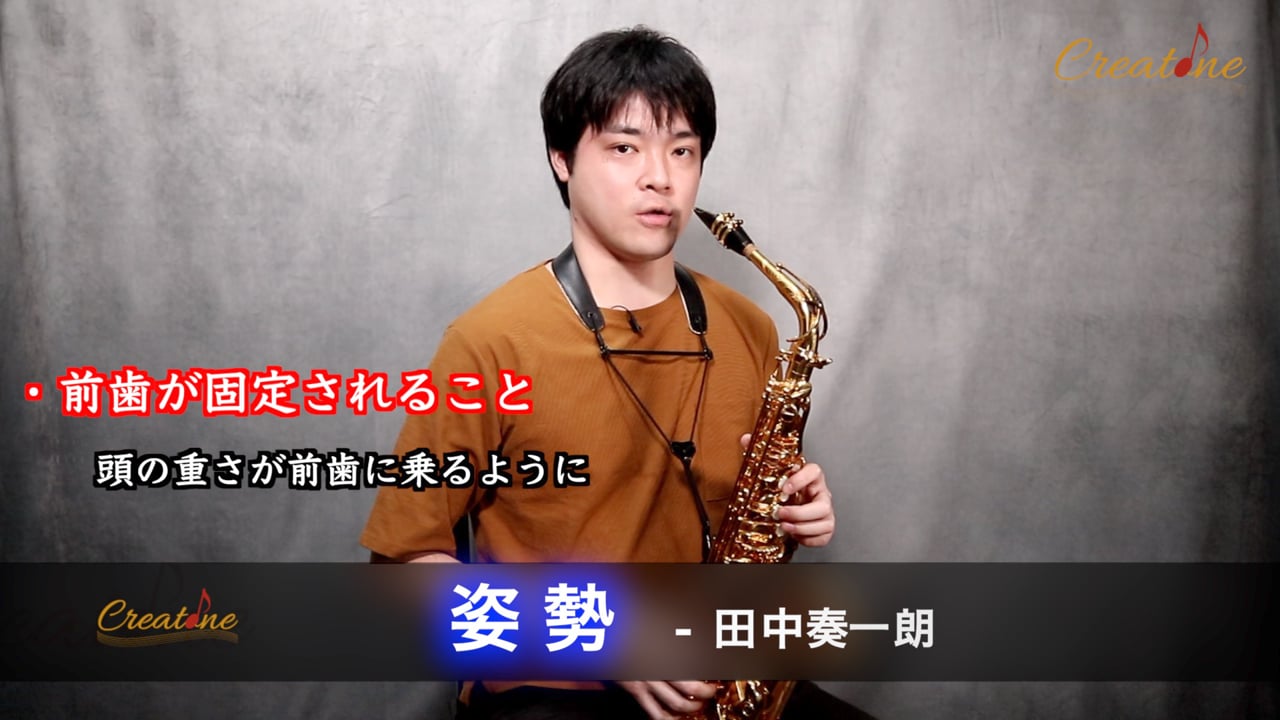
Mastering Saxophone Posture: The Fundamentals of Strap Height and Proper Playing Position
In saxophone performance, posture and strap height are crucial elements directly linked to tone quality and playing stability. Finding the height at which your front teeth anchor firmly on the mouthpiece and maintaining a relaxed posture are the foundations for producing a good sound. This article provides a detailed guide covering the basics of saxophone posture and strap height, comparisons of incorrect and correct examples, and practical practice steps.
