



The Complete Guide to Bassoon Flicking: Achieving Clear Articulation in the Tenor Register
Flicking is an indispensable technique in bassoon playing. This article provides a detailed explanation of the key operations and timing needed to produce beautiful A, Bb, B, and D notes in the tenor register, eliminating the muddiness of tone unique to the bassoon.
![[Saxophone] How to Cultivate Musicality and Expand Your Expressive Range: Broadening Your Perspective to Find Your Own Voice](https://i.vimeocdn.com/video/1882205550-a281c08b363a05a5414c5114b90fc5e5685fd651bf0411151b3916e7b202eb14-d_1280x720?&r=pad®ion=us)
[Saxophone] How to Cultivate Musicality and Expand Your Expressive Range: Broadening Your Perspective to Find Your Own Voice
Are you only listening to recordings of your own instrument? By going beyond the saxophone and studying the expression of orchestras, vocalists, and string players, your musicality will improve dramatically. Learn how to draw inspiration for your ideal sound from historical context and the techniques of other instruments.
![[Flute] The Allure of Vintage Flutes: Beautiful Tone Colors in the Orchestra as Taught by Louis Lot](https://i.vimeocdn.com/video/1872814085-207dfae216376037f42424ec968e31356d76dcfa3899fe6f60d80b5d405b79e6-d_1280x720?&r=pad®ion=us)
[Flute] The Allure of Vintage Flutes: Beautiful Tone Colors in the Orchestra as Taught by Louis Lot
The history of the flute traces a path from the traverso to the Boehm-system flute, during which many tonal colors and dynamic expressions were lost. Vintage flutes, led by the Louis Lot, remain fully usable today and teach us the ideal tonal range that the flute should occupy in orchestras and wind ensembles. This article explores the characteristics of vintage flutes, how they can be used in modern performance, and the significance of incorporating a vintage sensibility into modern flute playing.
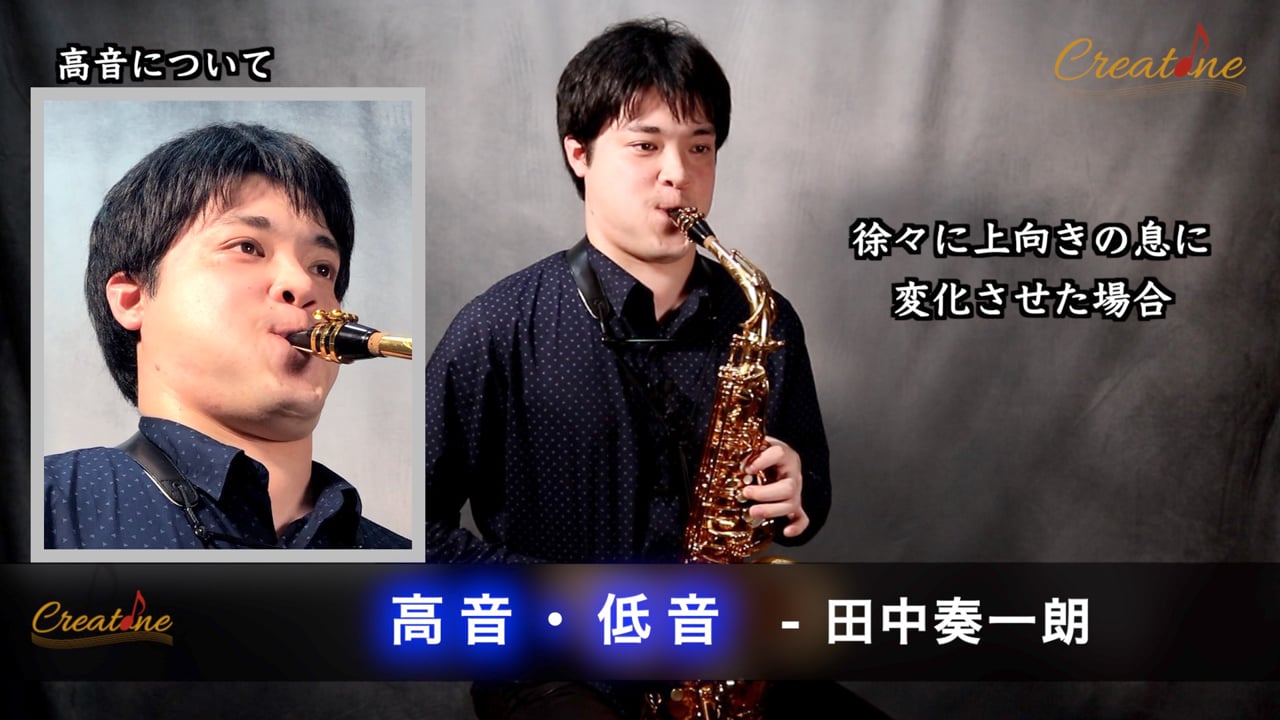
Saxophone: From Concept to Physical Sensation — Playing Techniques Focusing on Air Direction and Oral Cavity Space for High and Low Registers
In saxophone performance, producing beautiful tones in both the high and low registers requires understanding how to control air direction and oral cavity space, and physically experiencing these techniques. For high notes, blow with the air directed as if breaking through the mouthpiece, while being mindful of the space behind the nasal cavity. For low notes, direct the air downward and imagine expanding the space at the boundary between the throat and mouth.
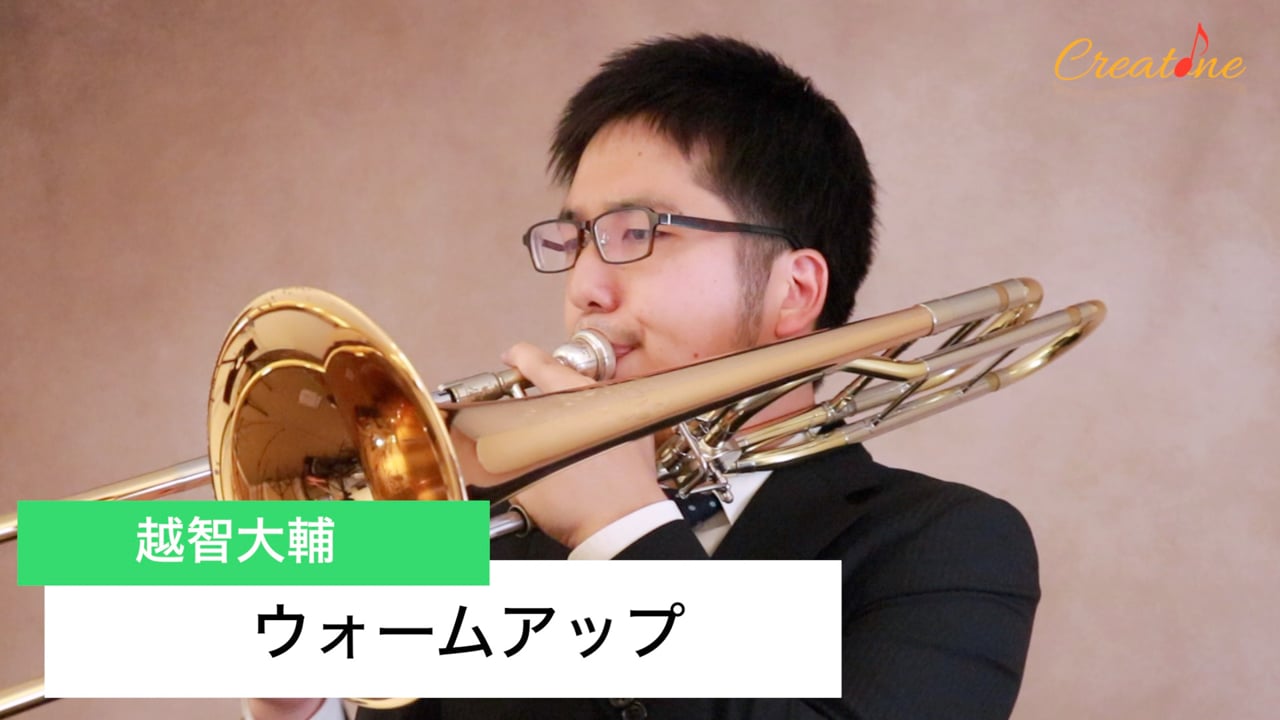
Effective Trombone Warm-Up: How to Master Airflow with Glissando Exercises
Warming up is a crucial preparation that greatly affects the quality of your subsequent trombone practice. Jumping straight into repertoire without warming up means suddenly placing a heavy load on your embouchure. Glissando exercises using the slide are ideal for understanding airflow, allowing you to warm up your lips slowly with plenty of air. This lesson explains specific practice steps for an effective trombone warm-up, comparing examples of poor and good technique.

Mastering the High and Low Registers of the Flute: Eliminating Tonal Disparity for a Uniform Sound
Do you struggle with a harsh tone in the high register or a breathy, thin sound in the low register when playing the flute? On an instrument that demands different embouchure and air control for each register, achieving a seamless connection across all registers while maintaining consistent tone quality is a crucial challenge. This lesson explains professional techniques for understanding how to use your body in each register so you can play beautifully and effortlessly across the flute's entire range.

The Role of the Right Hand in Shaping Horn Tone: Designing the Ideal Position for Optimal Sound
For horn players, inserting the right hand into the bell is a critically important element not found in any other instrument. A shift of just a few centimeters in hand position can dramatically alter both pitch and tone color. This article covers the complete process for refining your horn sound, from Mr. Hamachi's approach to right-hand position design based on the bell ring, to adapting hand shape for different performance contexts such as woodwind ensembles and brass sections, and achieving an ideal playing posture that does not restrict breathing.

Overcoming the A-B-A Transition on Clarinet: Setting Your Air Support Based on Tube Length
If you struggle with connecting A to B on the clarinet, the cause is often that your airflow cannot keep up with the change in register. On bass clarinet especially, the tube length changes dramatically, making it even harder. By setting your air support based on the longer tube (B) and then adjusting to the shorter register, you can improve the transition.
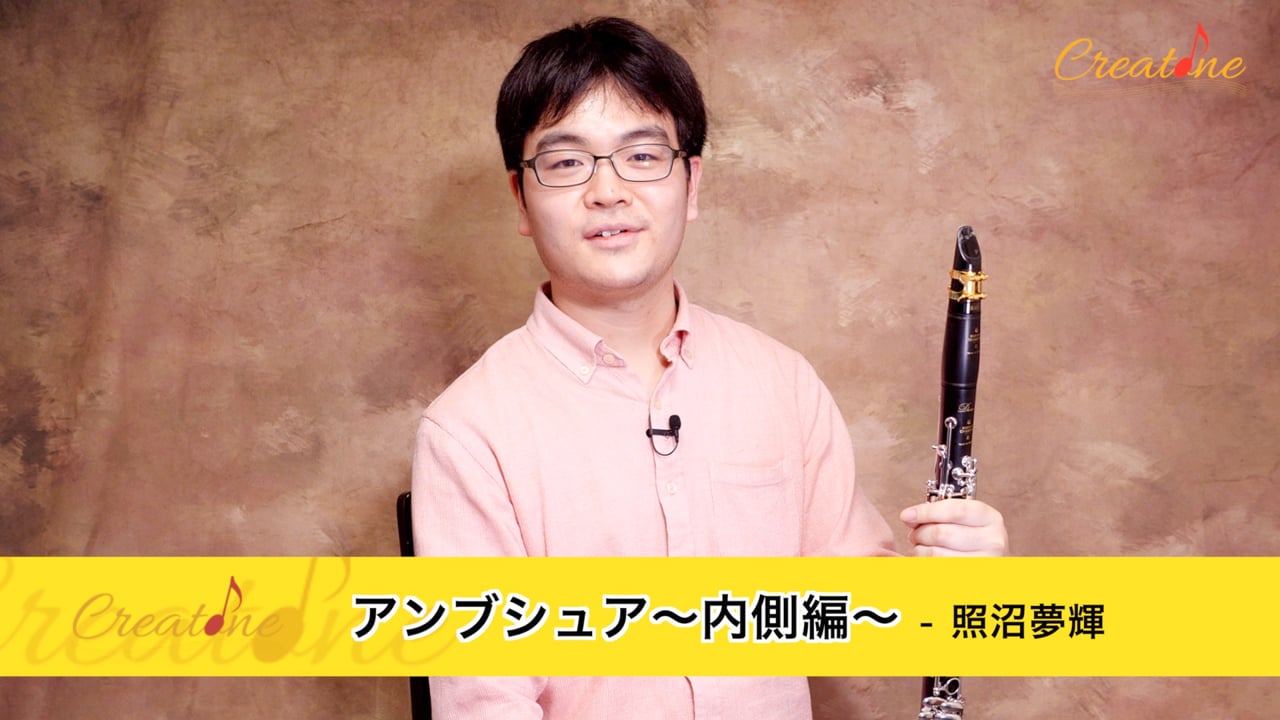
Inside the Clarinet Embouchure: How to Achieve a Resonant Tone Through Tongue Positioning
In clarinet playing, not only the outer embouchure but also the state of the inside of the mouth greatly affects tone quality. By raising the tongue into an arch shape and blowing with the "hee" syllable formation, you can focus your airstream and achieve a resonant tone. This article explains tongue positioning for efficient resonance and how to control the direction of your airstream.
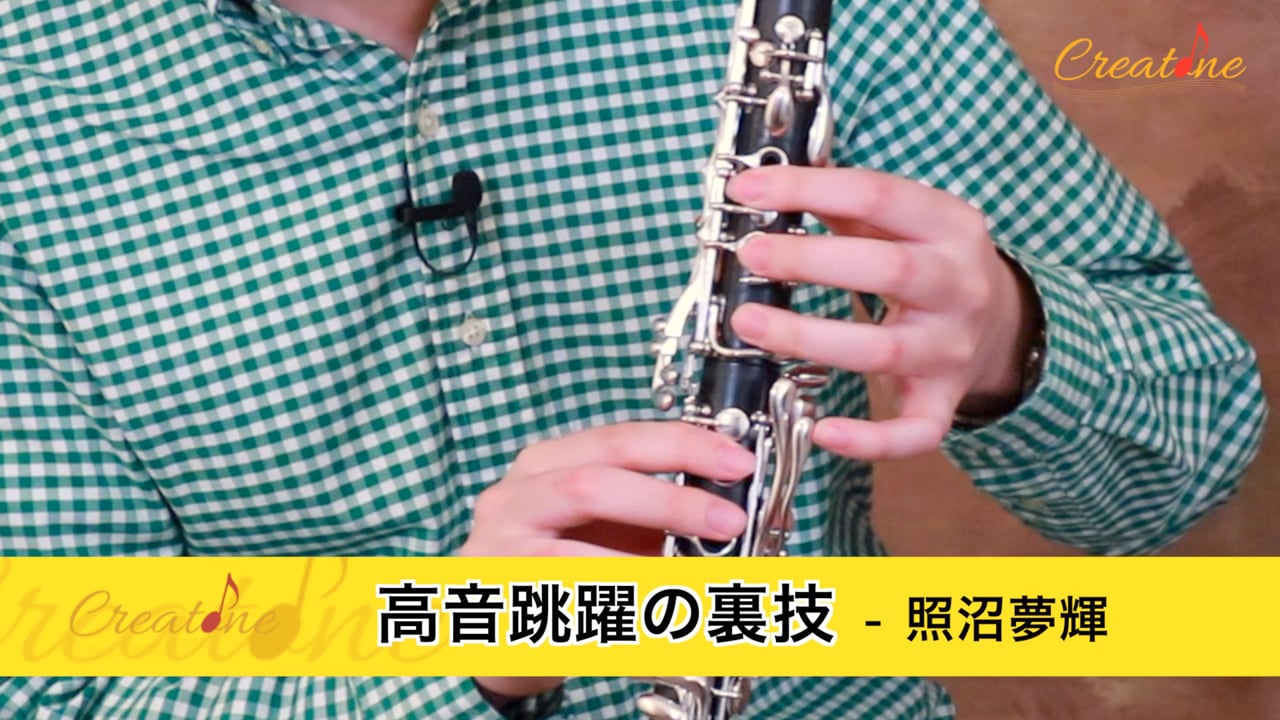
Half-Hole Technique with the Left Index Finger for Smooth Overtone Leaps on Clarinet
In clarinet playing, leaps from the 3rd to the 5th overtone are notoriously difficult passages where pitch tends to become unstable. Especially with large interval leaps such as D to high D, notes can sound choked or pitches can miss their target. This article provides a detailed explanation of the hidden technique of half-opening the left index finger — a trick not found in fingering charts — comparing common mistakes with correct examples.
![[Trombone] Playing Valve Low Notes Clearly: Muscle Techniques for Controlling Resistance in F and Gb Attachments](https://i.vimeocdn.com/video/1872843262-db9a13e382e5f1c1649d610d611740ba21690e12b36cf55e77fecfcb73b7e94c-d_1280x720?&r=pad®ion=us)
[Trombone] Playing Valve Low Notes Clearly: Muscle Techniques for Controlling Resistance in F and Gb Attachments
The valve-assisted low register is the hallmark of the bass trombone. But do you struggle with the increased resistance when pressing the valve? Learn a professional's approach to conquering the low range through upper-lip anchoring, lower-lip relaxation, and optimized air direction.

A Must-Read for Flute Beginners! How to Choose the Right Instrument and Maintain It for Years to Come
Choosing the right instrument is the most important decision when starting the flute. Learn why Japanese-made flutes are chosen worldwide, what to watch out for when using secondhand or school-owned instruments, and the secrets to proper maintenance for years of enjoyable playing.

Percussion Fundamentals for Building the Rhythmic Core: Developing Your Sound Image for Ensemble Excellence
Essential ensemble skills for percussionists. We introduce a training menu to develop the ability to lead with a sound image, and to control resonance and tone color. Learn the secrets to enhancing your presence in ensemble performance.

Turning Performance Anxiety into an Ally: Mental Strategies for Bassoonists to Perform at Their Best
Have you ever experienced stage fright so intense that your legs started shaking before a concert or recital? In this article, we explore how bassoonists can face the common challenge of performance anxiety. Rather than trying to force nervousness away, we introduce mental control techniques for delivering your true sound on stage—including how to reframe anxiety as a positive force, how to create an objective "third-person self" for self-observation, and how to maintain a healthy relationship with pre-performance routines.
![[Bassoon] Reed Maintenance and Adjustment: Stabilize Your Playing with Proper Care](https://i.vimeocdn.com/video/1845672231-4b7225267fe2b62c0b67456e820c34a51999dab899fa1aa62a68e9a0c12e52e0-d_1280x720?&r=pad®ion=us)
[Bassoon] Reed Maintenance and Adjustment: Stabilize Your Playing with Proper Care
The bassoon reed is a crucial element that affects the quality of your playing. Learn in detail through a Q&A format about how to soak reeds in water, cleaning timing, dealing with air leaks, tip adjustments, left-right symmetry, and wire adjustments to keep your reed in optimal condition.
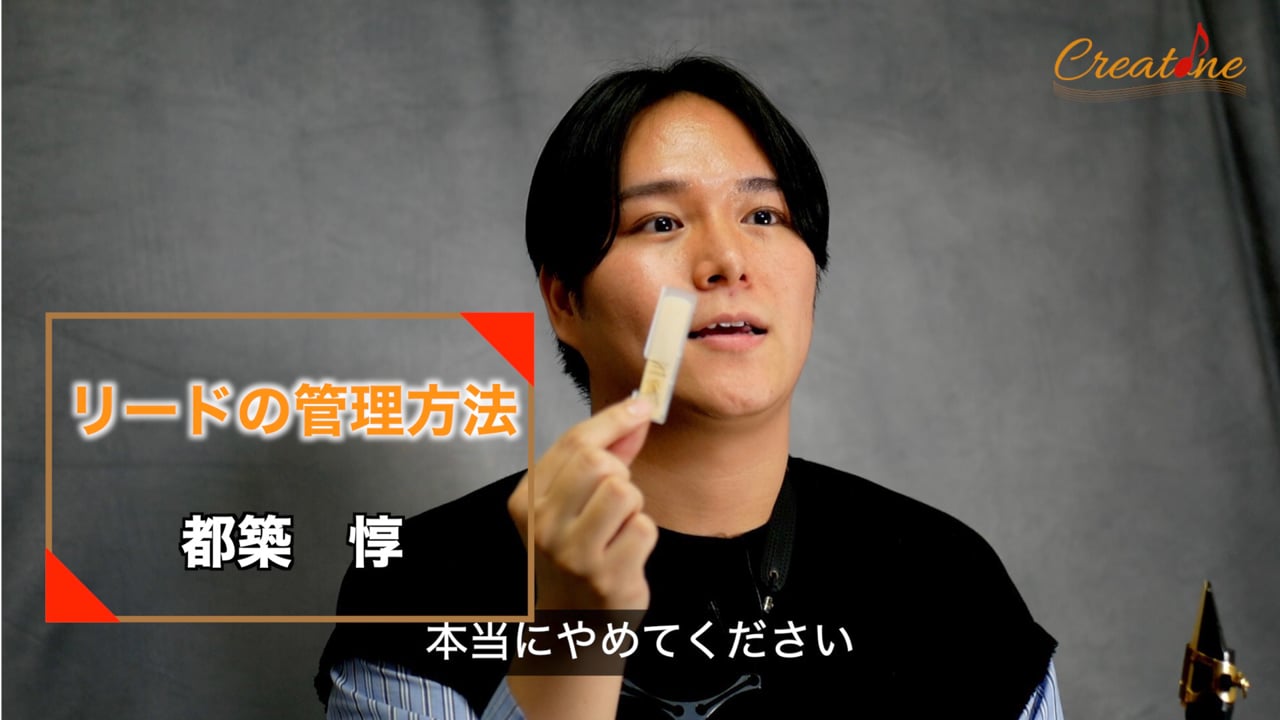
Saxophone Reed Management: Preparing for Performances with Humidity Control and Rotation
Many saxophone players struggle with how to manage their reeds. Reeds are highly sensitive to dryness, and without proper care, they quickly become unusable. By understanding the concepts of sealed storage with humidity stabilizers and rotation-based usage, you can keep your reeds in excellent condition for performances. This article provides an integrated approach to reed management, from understanding the core concepts to putting them into practice.

Mastering the Altissimo Register on Saxophone: Breath and Tongue Control for Greater Accuracy in the Upper Range
The altissimo register extends beyond the saxophone's standard range. Learn the key techniques—air speed, tongue position, and effective overtone-based training methods—explained in detail.
![[Horn] Orchestral Excerpt from Beethoven's Pastoral Symphony, 3rd Movement: Practicing to Keep Tempo Steady Through Ties](https://i.vimeocdn.com/video/1845767953-4b5f71e11ceb1c0d27d8a8e6296390e3b188d76315e74aee90bbbf4ba112fbe3-d_1280x720?&r=pad®ion=us)
[Horn] Orchestral Excerpt from Beethoven's Pastoral Symphony, 3rd Movement: Practicing to Keep Tempo Steady Through Ties
The 3rd movement of Beethoven's Symphony No. 6 "Pastoral" is an orchestral excerpt where ties within triple meter easily cause tempo to fall apart. The horn must ride the strings' forward momentum while maintaining absolute rhythmic stability in the solo with an unwavering beat. By using a metronome and practicing with 'ties removed,' you can engrain the sense of pulse deep into your body.
![[Clarinet] Mastering Dynamic Range: A Strength-Training Approach to Achieving Your Ideal Volume](https://i.vimeocdn.com/video/1845657883-e8e7c8646c188b3bc065bf755e28691f6611c78ec4abe2c8489e8eb0f2dffd79-d_1280x720?&r=pad®ion=us)
[Clarinet] Mastering Dynamic Range: A Strength-Training Approach to Achieving Your Ideal Volume
In **clarinet** performance, volume range (dynamic range) is the lifeline of expressiveness. This article provides a detailed guide to specific and effective "strength-training" exercises for controlling everything from the softest to the loudest sounds.

Overcoming Difficult Passages on the Clarinet: Practice Methods for Coordinating Sound and Fingers
Difficult passages on the clarinet can be overcome not by simply moving your fingers, but by coordinating the sound you sing in your head with your finger movements. It is effective to analyze the intervals between notes you cannot play, identify the problem areas, and then systematically practice by sustaining notes while grasping each pitch with your fingers.
