


Master Flute Register Control! Practice Methods to Solve the Problem of Notes Cracking
A thorough explanation of the causes and solutions for notes cracking during flute performance. From lip and abdominal muscle control methods to practice routines incorporating multiphonics that accelerate your improvement.

Establishing Proper Bassoon Playing Posture: Tips for Reducing Physical Strain and Maximizing Resonance
The bassoon is a heavy instrument that requires an asymmetrical playing position. This article provides a detailed guide to finding your optimal posture, covering relaxation of the shoulders and sides, eye level positioning, supporting the instrument with your right hand and shoulder, and how balancer adjustments can transform your sound.
![[Bassoon] Mastering Accents in No. 2: Weight Distribution in Triple Meter and Breath Bounce](https://i.vimeocdn.com/video/1845676655-d69bfcd9d31f56bc9f6b01548dbaa15d2a638e9bec53bbbd95ccd0e863cee446-d_1280x720?&r=pad®ion=us)
[Bassoon] Mastering Accents in No. 2: Weight Distribution in Triple Meter and Breath Bounce
In No. 2 for bassoon, simply blowing harder for accents tends to make the sound rough. This article organizes the approach to emphasizing beat 3 in triple meter, keeping non-accented notes natural, adjusting half-hole angles, and grouping sixteenths as pairs equal to one eighth note for a controlled breath bounce, all in a practical format.
![[Bassoon] Fixing Posture Problems: Corrective Steps for Stable Performance](https://i.vimeocdn.com/video/1845672052-8ec4186dd96e453f50f0f4d560c5f4b36ac9262aa6cc6c2cb358e9f18ca21c1a-d_1280x720?&r=pad®ion=us)
[Bassoon] Fixing Posture Problems: Corrective Steps for Stable Performance
Due to its weight and unique holding position, the bassoon is an instrument that easily leads to poor posture. This article explains how to build correct posture—including balancing left and right sides, correcting forward lean, and engaging core awareness—to reduce physical strain and produce a rich, resonant sound.
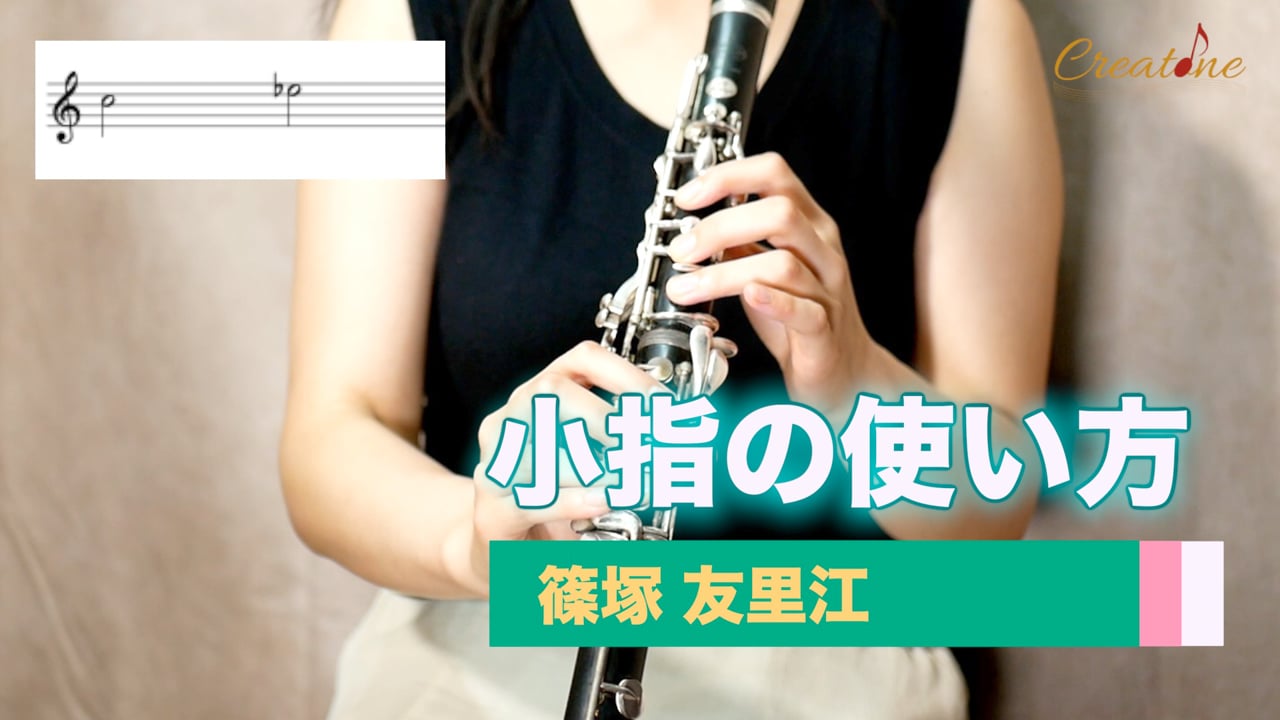
How to Properly Use Different Pinky Fingerings on the Clarinet
Clarinet pinky fingerings can produce the same note with multiple fingers, making it a technique where players often wonder which finger to use. Because the clarinet's pinky keys are linked, fingerings must be chosen with consideration for the scale's flow and key linkages. In particular, there are cases where you must start with the left hand, such as with C to E or C-sharp to D-sharp, and cases where linkages must be considered in scales. By properly differentiating pinky fingerings on the clarinet, smooth playing becomes possible.

Horn Buzzing: Focus on 'Flowing the Air' Rather Than 'Blowing.' Reduce Muddiness with a Small Aperture and a Relaxed Approach
Buzzing is a practice of vibrating the lips, but trying too hard to 'make them vibrate' during playing tends to produce a muddy tone. What matters most is not the effort of blowing, but the sensation of letting air flow naturally. Keep your lips in a small, round aperture and create a state where sound emerges with a gentle airstream, as if blowing out birthday candles. This article organizes the mindset for releasing the tension that beginners often fall into.

Trombone Tonguing Fundamentals: Master Clear Articulation by Learning to "Release" the Tongue
Tonguing is far more than simply separating notes. The key to achieving clear, beautiful articulation on the trombone lies in a paradigm shift: thinking of the tongue as "releasing" rather than "striking." This essential guide to tonguing is for everyone from beginners to intermediate players who struggle with the start of their notes.

Clarinet (Bass Clarinet) Posture: Angle and Three-Point Support to Avoid Crushing the Reed
Because the bass clarinet connects to the floor, poor posture and angle make it easy for the instrument's weight to crush the reed. This article covers how to adjust endpin height, instrument angle, and three-point support using a strap to stabilize your clarinet tone and articulation.

Mastering Tuning for Stable Horn Intonation: Refining Your Ideal Sound Through Ear and Sensation
Tuning the horn is not just about moving tuning slides. Sensing resonance with your ear and refining your awareness of oral cavity shape and right-hand position are the true shortcuts to stable intonation. This article provides a detailed guide to the correct procedure from the main slide to each valve slide, along with practical techniques for controlling pitch during performance.
![[Saxophone] Bass Line Performance on Baritone Saxophone: Tone Design for Enhanced Musical Expression](https://i.vimeocdn.com/video/1845681284-b771b8543bf8fc8267be3ea9b3d51d8db2a8b8ab93e1f701d6f35964336a8bf2-d_1280x720?&r=pad®ion=us)
[Saxophone] Bass Line Performance on Baritone Saxophone: Tone Design for Enhanced Musical Expression
When playing bass lines on **saxophone**, especially baritone saxophone, the notation is often simple and can easily become monotonous. To bring these lines to life musically, it is essential to approach them with the same awareness as when performing a melody, combined with careful attention to tone quality. This article explains specific steps for refining the tone of your bass lines.

Understanding Tone Color and Sound Quality on Euphonium: Practical Checkpoints for Improvement Through Fundamental Exercises
In euphonium playing, tone color and sound quality are distinct concepts. Tone color is refined through repertoire and etudes, while sound quality is improved through fundamental exercises. Since the richness of resonance determines sound quality, it is essential to polish your sound quality through fundamental exercises such as long tones. This article provides a detailed explanation of the differences between tone color and sound quality on euphonium, along with specific checkpoints and practical steps for improving sound quality through fundamental exercises.
![[Tuba] Being Aware of Airflow: Visualizing the Invisible Breath to Transform Your Sound](https://i.vimeocdn.com/video/1845773336-5e5db47343c075d6e9acab13c0b560f61f6f4a918b059e71eb70b2b5c1809102-d_1280x720?&r=pad®ion=us)
[Tuba] Being Aware of Airflow: Visualizing the Invisible Breath to Transform Your Sound
In tuba playing, airflow is one of the most important elements that determines tone quality. Even with plenty of blowing resistance, if the space between your teeth and nose is closed or the air isn't flowing, the sound becomes choked and stuffy. To become aware of your invisible breath, there are specific methods such as practicing with a piece of paper, siren exercises on the mouthpiece, and adjusting resistance with your pinky finger. This article provides a detailed explanation of the causes of choked airflow, methods to become aware of your invisible breath, Q&A for creating your ideal resonance, and practical training exercises.
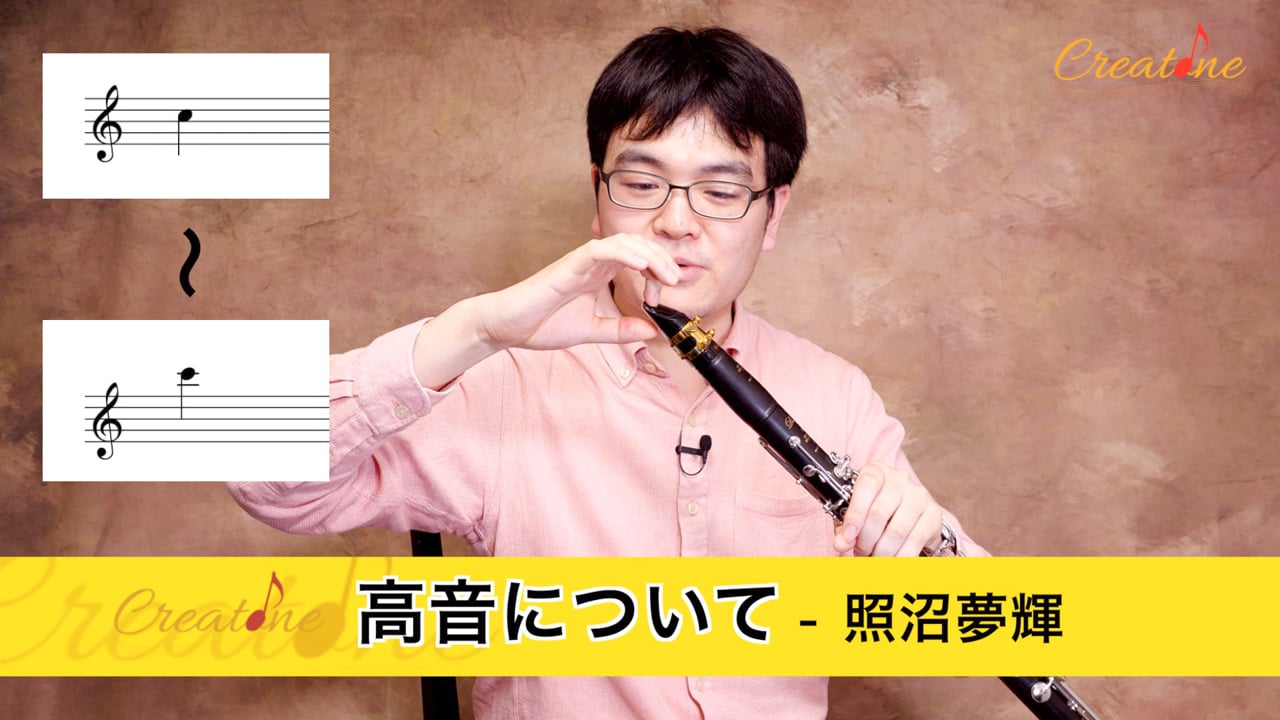
Mastering the High Register on Clarinet: Tips for Achieving Stable Tone and Pitch Through Proper Setup and Technique
Do you struggle with sagging pitch or instability in the clarinet's high register? Stabilizing the upper range requires not only overtone exercises but also proper mouthpiece depth and the right way to push the instrument upward with your right and left thumbs. Develop correct form and achieve the ideal high notes you've been aiming for.

The Art of Trombone Tonguing: Creating Resonance Through the Balance of Air and Tongue — A Q&A Guide
When we think of trombone tonguing, it is often seen as simply using the tongue to articulate a "tu" to separate notes. However, on brass instruments that require a great deal of air, articulating with "tu" alone is not enough to produce well-resonant tongued notes. Tonguing is 50% tongue and 50% air. It is crucial to sustain the airflow with a "too" rather than a clipped "tu." Additionally, if the embouchure moves during tonguing, it causes what is often described as notes that "swell after the attack." This article provides a detailed Q&A-format explanation of how to achieve beautiful trombone tonguing through the balance of air and tongue, a stable embouchure, and double tonguing for fast passages.
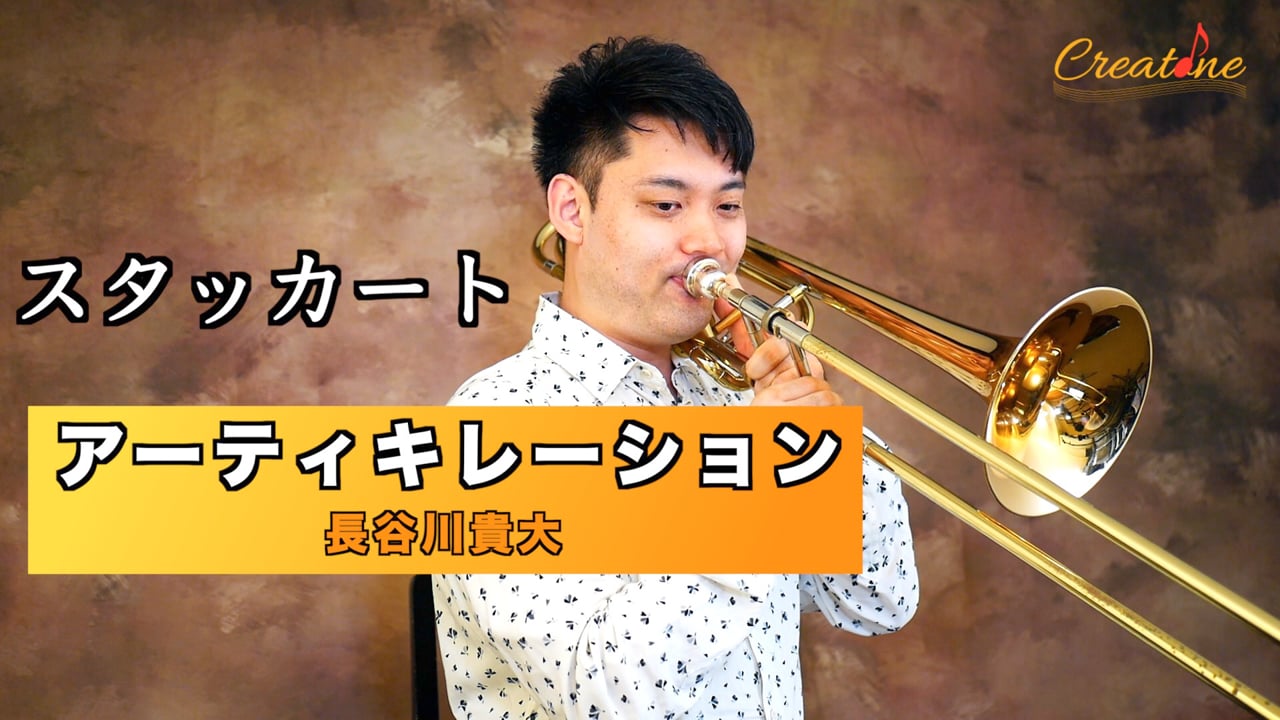
Enhancing Trombone Expressiveness: Fundamentals and Applications of Articulation
Articulation is essential to trombone performance. This lesson provides a detailed guide to controlling the shape of each note—including staccato, tenuto, and more—along with a one-week practice plan.

Horn Ensemble: Techniques for Supporting the Sound Through Non-Playing Awareness
In horn ensemble performance, not only playing technique but also non-playing courtesies are essential. Emptying water keys and turning pages during quiet passages, the skill of "staying still" so as not to disturb a soloist's concentration, tips for synchronizing preparation timing, count support — these small acts of consideration can greatly enhance the quality of an ensemble. This article explains the non-playing considerations and practical methods for horn ensemble.
![[Trombone] Mastering the Fundamentals with Long Tones: Q&A on Building Tone and Embouchure Strength](https://i.vimeocdn.com/video/1872800665-3c1efee02b060d8e7377ef99a90b9206aeb0f6214d8f197b173b03445b3387f3-d_1280x720?&r=pad®ion=us)
[Trombone] Mastering the Fundamentals with Long Tones: Q&A on Building Tone and Embouchure Strength
Long tone practice is an essential exercise for brass instruments, including the trombone, that simultaneously develops tonal imagery and lip strength. In the "Two-Time Long Tone" method, where you play the same note twice, you listen carefully to your own sound on the first attempt, then play the second time while imagining your ideal tone. This process allows the mental image of your sound to automatically improve the control of your lips, oral cavity, and tongue. By practicing with a metronome while being conscious of beat counts, you can also use this exercise as a daily barometer of your physical condition. This article provides a detailed Q&A explaining the importance of long tone practice for trombone and practical methods for effective training.

Tips for Stabilizing the Bassoon's High Register: A Guide to Air Speed, Core Support, and Whistling Exercises
Struggling with missed notes or flat pitch in the bassoon's high register? This guide organizes solutions through air speed, abdominal support, and the sensation of whistling. Build consistency with practice steps you can try tomorrow.

The Importance of Roles and Tone Color in Horn Ensemble: Mastering the Switch Between Melody and Harmony
In a horn ensemble, the roles of upper and lower players frequently alternate. When playing the melody versus playing harmony, you need to consciously adjust your tone color, volume, and sense of tempo. If you perform without fulfilling your role, it becomes unclear who has the melody, and the overall balance falls apart. This article provides a detailed explanation of how to shape your tone according to your role and practical exercises for expanding your tonal range.
![[Horn] Achieving Your Ideal Sound: An Approach That Harnesses Airflow](https://i.vimeocdn.com/video/1873117327-c94ab98e784999f1f84cbe700ed7d7280711c6bffef44f40e93d4dc15def51a7-d_1280x720?&r=pad®ion=us)
[Horn] Achieving Your Ideal Sound: An Approach That Harnesses Airflow
There are two approaches to producing the ideal horn sound: one where you actively shape the air yourself, and another where you let the instrument vibrate naturally with the airflow. With the latter approach, you can achieve a natural, richly resonant sound by maintaining a wider aperture, securing space inside the mouth, and aiming for a syllable between 'oo' and 'oh' (closer to 'oh'). By visualizing a single tube extending from the throat to the instrument and opening the back teeth, you can get closer to the ideal tone. This article provides a detailed Q&A-format explanation of the concept behind ideal sound production, securing the aperture and oral cavity space, syllable awareness, and the imagery of a single tube from the throat to the instrument.