



Creating Beautiful Horn Harmony: Ensemble Practice Focusing on Volume Balance and Tonal Depth
To create beautiful harmony in a horn ensemble, volume balance and tonal depth are key. This lesson explains specific techniques such as not playing louder than the upper parts, producing a deep and supportive tone, tuning 5ths slightly bright and 3rds slightly low, and more. By playing with a resonant, full-bodied tone, you can produce beautiful harmony even when intonation is not perfectly aligned.

Rethinking Tuba Tonguing: Tongue Control That Prioritizes Tone Quality
Do you think of tonguing as simply "cutting off the sound"? To efficiently produce sound on an instrument as large as the tuba, tonguing must be redefined as "guiding the airflow." This lesson provides a detailed explanation of syllables that give the sound a clear contour while minimizing the tongue's impact on tone quality, as well as practice methods for developing a delicate tongue touch. Transform your concept of tonguing from the ground up and achieve refined articulation.

Horn Flexibility: Arpeggios with Light Air. Loosening the Lips with Relaxed Tonguing
Training Exercise 5 of the Hamaji Method is an arpeggio exercise that descends two octaves from the upper register and ascends back up. The most important point is to "never overblow." Since the purpose is to soften the lips for the day and to check your air column width and oral cavity space, you should proceed with light air without worrying about mistakes. This article summarizes the approach to improving flexibility using relaxed "ti ti ti" tonguing.

Right Thumb Position on the Bassoon: The Key to Smooth Scale Playing
The cause of tangled fingers during scale practice may lie in the "resting position" of your right thumb. This article provides a detailed explanation of strategic thumb positioning—starting from the A key—for both flat-key and sharp-key movements, showing how to minimize travel distance and achieve seamless coordination.

Mastering Microtones on the Saxophone: Fingerings and Intonation Techniques
This lesson explains how to find fingerings for playing microtones on the saxophone and how to achieve accurate intonation. Learn the technique of lowering the pitch by a quarter tone by adding extra keys, tips for identifying correct pitch using a tuner, and develop the microtonal skills essential for contemporary music.
![[Saxophone] Soprano Intonation Correction: Pitch Mastery Through Alternate Fingerings and Mental Imprinting Practice](https://i.vimeocdn.com/video/1845671494-5ff30ad2ef338cce7965a628b09e295a8b3aef14bd15a6a1a1ccccc5b626fa7c-d_1280x720?&r=pad®ion=us)
[Saxophone] Soprano Intonation Correction: Pitch Mastery Through Alternate Fingerings and Mental Imprinting Practice
The soprano has pitch tendencies completely opposite to the alto saxophone. Learn professional alternate fingerings for instantly correcting unstable notes such as C#, D, and A, along with strategies for managing the pitch that rises the longer you play. Train your brain and body to internalize "soprano-specific fingerings."
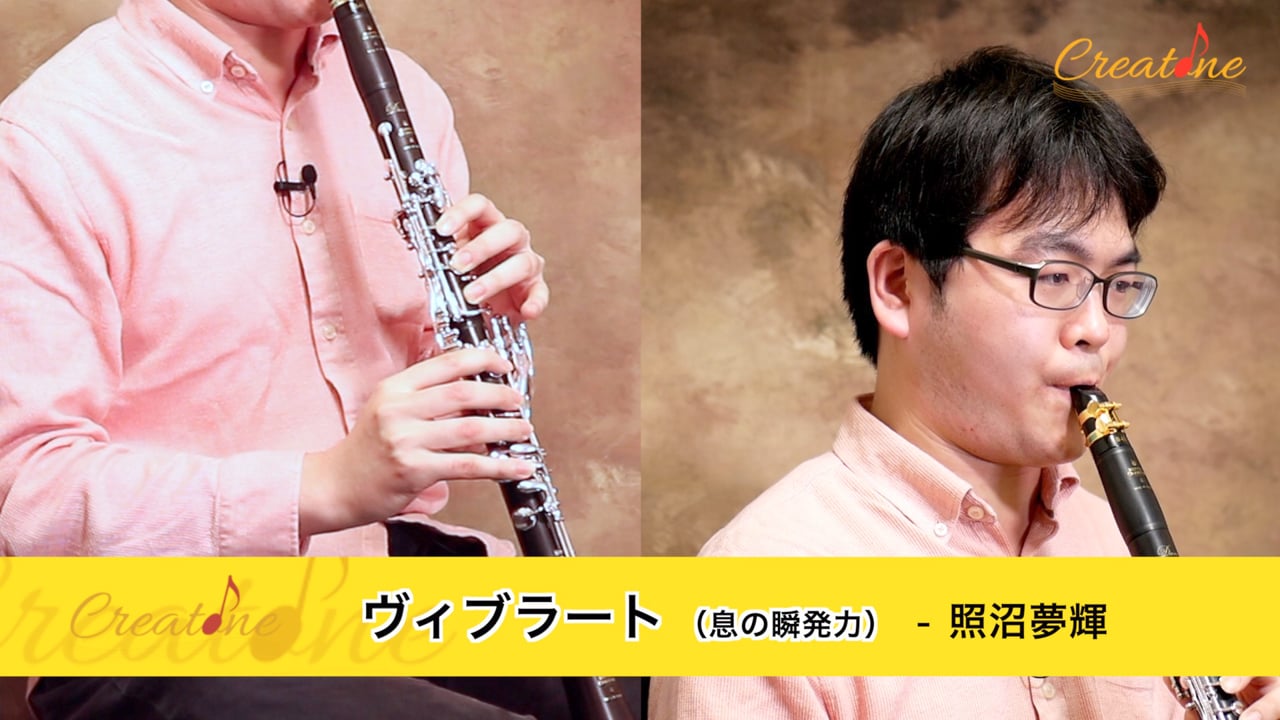
Clarinet Vibrato Practice: Building Breath Agility to Enhance Expressiveness
The clarinet is generally considered an instrument that does not use vibrato, but vibrato practice is highly effective as an exercise for building the ability to move your breath. The expressiveness of wind instruments depends on how freely you can control your breath. This article provides a detailed explanation of how to develop breath agility through clarinet vibrato practice and expand the range of your musical expression.
![[Saxophone] Tips for Improvement: Learning 'Body Mechanics' and 'Self-Teaching Methods' from the Players You Admire](https://i.vimeocdn.com/video/1845364265-5bc65b61904f8f8e69f9e57ef19456656252fbaee1d3c8a1ac63956c1af51f1f-d_1280x720?&r=pad®ion=us)
[Saxophone] Tips for Improvement: Learning 'Body Mechanics' and 'Self-Teaching Methods' from the Players You Admire
To break through plateaus as a **saxophone** player, the ability to emulate great performances and independently solve challenges through self-directed learning is essential. This article reveals how to learn the cause-and-effect relationships of sound from internationally renowned masters, and shares professional practice methods that leverage extensive reference materials.

Clarinet Finger Shape: Get Faster with an Egg-Shaped Form and Minimal Stroke
The harder you press the keys on a clarinet, the more you lose speed and smoothness. This lesson covers the natural egg-shaped hand form, minimal finger lift, proper placement of unused fingers, and using arm rotation to press heavy keys.
![[Trumpet] Steps to Refine Your Tone: Fundamentals of Breath Control](https://i.vimeocdn.com/video/1845300444-706aa8197c74f21fb69c92c59e50ce4a4943b64c4ac87456e3793f703722fe1f-d_1280x720?&r=pad®ion=us)
[Trumpet] Steps to Refine Your Tone: Fundamentals of Breath Control
Breath control is essential for producing a beautiful tone on the trumpet. While we breathe unconsciously in everyday life, we must breathe with intention when playing our instrument. In this article, based on Risa Nimura's lesson video, we explain effective breathing techniques that combine abdominal and chest breathing, along with specific breath training steps to refine your tone.

Mastering Overtone Practice on Clarinet: Embouchure Strengthening and Advanced Tonguing Techniques
In clarinet playing, overtone practice is extremely important for strengthening the embouchure muscles and stabilizing tone quality. This article provides a detailed explanation of key considerations for tonguing during overtone practice, flexible jaw technique, and tips for achieving beautiful legato.
![[Clarinet] Building Your Ideal Tone with Long Tones: A Complete Guide from Visualization to Practice](https://i.vimeocdn.com/video/1845657434-ea9dd0dd9cedd860988c29e1103f5c88c7aabb5caba86b880febe0cb1c9b452f-d_1280x720?&r=pad®ion=us)
[Clarinet] Building Your Ideal Tone with Long Tones: A Complete Guide from Visualization to Practice
In clarinet long tone practice, the most important step is forming a mental image before producing any sound. By clearly visualizing the tone you want to produce — whether a strong and robust sound, or a warm and gentle sound — you naturally develop the playing technique to match that image. This article provides a detailed explanation, from the perspective of setup and form, of how to build your ideal tone through clarinet long tones, covering everything from forming your mental image to practical steps.

Tuba Holding Position: Achieving Ideal Posture with Non-Slip Mats and Stands
Because the tuba is a large instrument, players often find themselves performing on an instrument that doesn't match their body size. This article explains how to use non-slip materials and a tuba stand to achieve ideal posture and ensure a clear airflow path.
![[Saxophone] The First Step to Vibrato: Pitch Control Exercises to Develop Embouchure Flexibility](https://i.vimeocdn.com/video/1845665421-f4fee536bc7c655731d6aff47f3f90e7553eb3a4c3cf97527bddc6ca7026a5e9-d_1280x720?&r=pad®ion=us)
[Saxophone] The First Step to Vibrato: Pitch Control Exercises to Develop Embouchure Flexibility
The key to mastering vibrato lies in the flexibility of your jaw and mouth. Before learning to create waves, master this essential training method for freely controlling pitch up and down, along with the embouchure foundation-building techniques used by professionals.

Trombone Buzzing: Developing Lip Vibration to Build the Path to Your Ideal Tone
The source of sound on the trombone is lip vibration — buzzing. The key lies in how efficiently and resonantly you can produce vibration using the mouthpiece. This method explains how to achieve the sensation of your lips vibrating naturally through the power of air, without relying on excessive tension. We cover in detail how to approach from the low register and training techniques to strengthen the connection between mouthpiece buzzing and playing the instrument.
![[Bassoon] Mastering the Low Register: From Concept to Practice for Achieving a Rich, Resonant Sound](https://i.vimeocdn.com/video/1845672926-5b6a10cfcd822914631c6f8ce6c2b19711c82395671c843cc5c01cd206ca7883-d_1280x720?&r=pad®ion=us)
[Bassoon] Mastering the Low Register: From Concept to Practice for Achieving a Rich, Resonant Sound
In bassoon playing, the low register is the area most players find most challenging. To reliably produce a resonant low register—where the complexity of left-hand key operation, the required air volume, and embouchure adjustments all intertwine—it is essential to first understand the concepts and then put them into practice. This article provides a step-by-step guide from the fundamental concepts to specific practical methods for the bassoon's low register.

Mastering Tuba Lip Slurs: Achieving Smooth Register Changes Without Interrupting Airflow
For tuba players, smooth lip slurs are the cornerstone of expressive playing. When notes cut out or tone quality changes between registers, the root cause is often a rigid embouchure that interrupts airflow. This article introduces the concept of switching the embouchure like flipping a switch, along with training methods for connecting notes using only air without the tongue. Through a comparison of ideal lip slurs and common pitfalls, you will learn to develop a flexible and reliable approach to this essential technique.

Rethinking Saxophone Articulation: Staccato as 'Releasing the Sound'
Staccato, tenuto, accent — are you simply playing the markings on the score mechanically? A professional redefines staccato as 'detaching and releasing the sound.' By learning to avoid stopping notes with the tongue and instead harnessing natural resonance, your saxophone playing will come alive with far greater expression.
![[Bassoon] Mastering Volume and Expression: A Step-by-Step Guide to Building Your Ideal Sound](https://i.vimeocdn.com/video/1845673828-f882c0bb88a679751e9d4f161d0988435065b20672a948b9003a1ad1da9094b5-d_1280x720?&r=pad®ion=us)
[Bassoon] Mastering Volume and Expression: A Step-by-Step Guide to Building Your Ideal Sound
Issues with bassoon volume are often caused not by sheer loudness but by articulation. This article explains concrete approaches for controlling dynamics while maintaining a rich, resonant tone, without forcing yourself to suppress your sound.

Approaching the Truth of Tuba Performance: The "Ultimate Philosophy" Woven by Breath and Vibration
To make the tuba's massive body resonate, we study many techniques. Yet at their core lie two surprisingly simple elements: "breath" and "vibration." Release unnecessary tension from your body and explore a deep philosophy for resonating your soul with the instrument, reexamining your very essence as a performer.
