



Building Stability in Percussion Performance: The Ideal Form and Relaxation System
The secret to consistent tone lies in the relationship between your body and the instrument. This article explains in detail the ideal stance for percussion performance, stick grip, and the process of eliminating tension through 'relaxation.' Build a fatigue-free form for long-lasting performance.
![[Bassoon] Choosing the Right Instrument: A Checklist for Selecting the Best Maker for Your Goals](https://i.vimeocdn.com/video/1845674370-c1f20006f4a69da717138260e9a5ead37f90ec3d019a35273d5a414cd87ba706-d_1280x720?&r=pad®ion=us)
[Bassoon] Choosing the Right Instrument: A Checklist for Selecting the Best Maker for Your Goals
Bassoons come in a wide range of makers and models, from beginner to professional level. Since price ranges and characteristics vary greatly, it is important to choose an instrument that matches your goals and budget. By understanding the characteristics of major bassoon makers and using the purpose-based checklist, you can make the right choice.

Euphonium High Note Approach
When approaching high notes on the euphonium, prioritizing tone quality is essential. Using vibrato to increase resonance and expanding range by half steps is an effective approach. This article explains effective methods including practice patterns combining low and high notes, and how to take proper rest when fatigued.
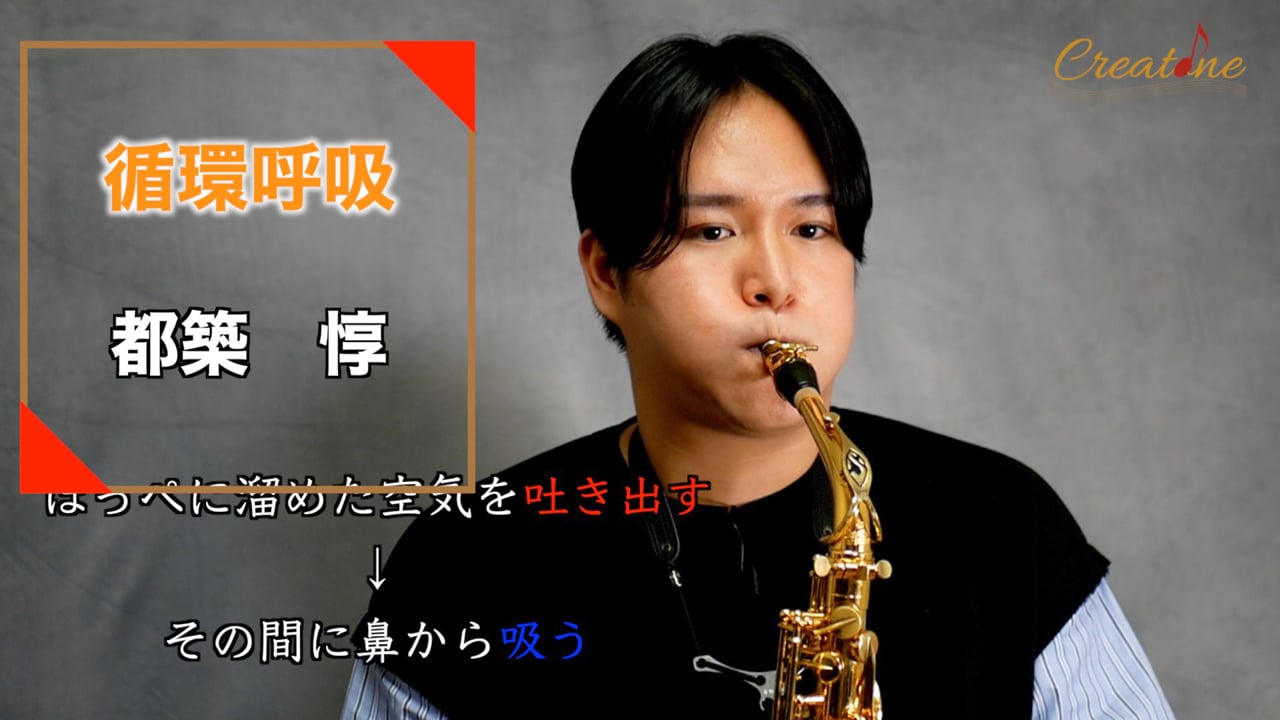
Circular Breathing on the Saxophone: Playing Long Phrases Without Interruption
By mastering circular breathing on the saxophone, you can play sustained notes and long phrases without any break. Circular breathing is a groundbreaking technique where you store air in the cheeks and push it out while simultaneously inhaling through the nose. This article explains the step-by-step practice methods in detail.
![[Saxophone] Mouthpiece Training: Building Fundamentals Without the Full Instrument](https://i.vimeocdn.com/video/1845338101-e6db6a07e6972af2721ccb689b377901bda2db0c464cd97508fd00d795041fa5-d_1280x720?&r=pad®ion=us)
[Saxophone] Mouthpiece Training: Building Fundamentals Without the Full Instrument
In saxophone playing, mouthpiece-only training is a crucial method for strengthening fundamentals. By understanding tongue and throat position when lowering pitch, the 'drawstring bag' concept of embouchure support, and muscle training exercises you can do without the instrument, you can improve your playing technique.

Building the Foundation for Bassoon Performance: Mastering Correct Posture for a Stable, Resonant Sound
The bassoon is a very heavy instrument, and the way you hold it can dramatically change the quality of your playing. This article explains correct posture for both seated and standing performance. From strap adjustment and bocal positioning to the use of the instrument-specific 'trouser guard,' we introduce specific checkpoints for achieving stable performance.
![[Saxophone] Posture: The Correct Stance That Shapes Your Tone](https://i.vimeocdn.com/video/1845697925-3c971ca9f73e94dcf7d722f9c2b92065cbd918169ff926df35d0b53627e5da32-d_1280x720?&r=pad®ion=us)
[Saxophone] Posture: The Correct Stance That Shapes Your Tone
In saxophone performance, posture is a critical factor that directly affects tone. When the shoulders roll inward and you hunch over, tension builds in the arms, fingers, and throat, negatively impacting your sound. This article explains in detail the importance of correct posture in saxophone playing, along with specific checkpoints and practical practice steps for performing in a relaxed state.
![[Saxophone] Mastering Scale Practice: Q&A for Achieving Accurate Fingering and Even Tone](https://i.vimeocdn.com/video/1845661320-9869a96b18010cd0cd78e053c604636aa22f857d4b5f11fb20b8c16b67dbb77d-d_1280x720?&r=pad®ion=us)
[Saxophone] Mastering Scale Practice: Q&A for Achieving Accurate Fingering and Even Tone
Scale practice is indispensable for saxophone improvement. It's not just about playing the notes in order — the key is moving your fingers accurately and maintaining even tone across all registers. By incorporating articulation variations and interval exercises in 3rds and 4ths, you can develop more practical technique. This article explains in Q&A format the key points and specific practice steps for raising the quality of your scale practice.
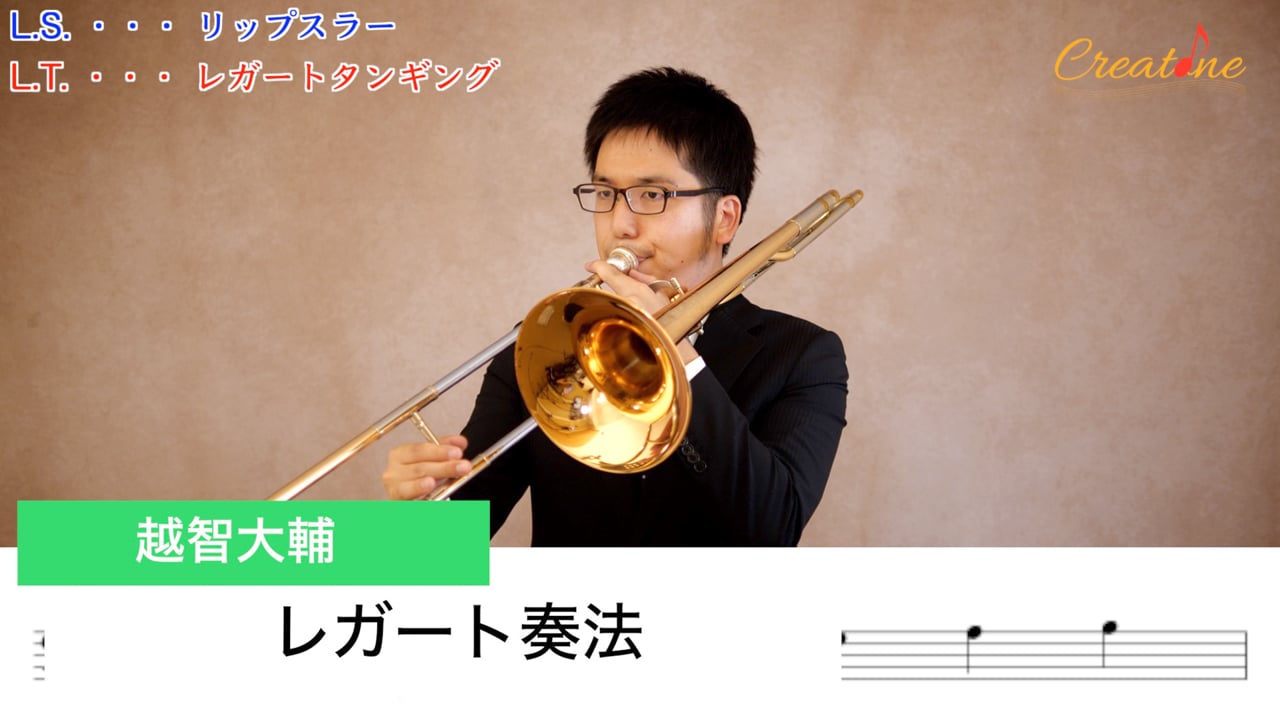
Trombone Legato Technique: Correct Tonguing Methods to Master the Most Difficult Skill
Trombone legato is arguably the most difficult technique among all trombone skills. Unlike other instruments that can naturally achieve legato by pressing keys or valves, doing the same on trombone lets intermediate notes slip in, preventing clean legato. By distinguishing between legato tonguing ('lu, lu') and lip slurs, you can achieve smooth note-to-note connections. This article explains specific practice steps for mastering trombone legato with NG and OK comparisons.

Horn Articulation and Tonguing Basics: 3 Steps to Achieve a Clean Attack
Beautiful horn tone begins with precise articulation. By correctly understanding the three steps — blowing air, vibrating the lips, and separating notes with the tongue — you can resolve tonguing difficulties. This article introduces concrete methods to dramatically improve horn articulation accuracy, including no-tonguing exercises and tongue placement for different registers.
![[Bassoon] Soft Staccato: Shaping Expression with Core Support and Beat Design](https://i.vimeocdn.com/video/1845676928-51617c07b65ebb1f4c855eebbbe441ee3f0c625a753866801c7803583d23e224-d_1280x720?&r=pad®ion=us)
[Bassoon] Soft Staccato: Shaping Expression with Core Support and Beat Design
Bassoon staccato tends to sound hard when the mindset is focused on 'stopping' the sound. Create support from the abdomen and separate notes while letting resonance linger. Eliminate dynamic unevenness within the beat so offbeats don't stick out, and build the image of staccato riding on top of a bass-line axis. This article summarizes NG/OK comparisons and practice steps.

Euphonium Breathing Technique: Recognizing Spatial Awareness for a Natural Airflow
In euphonium playing, breathing technique is a critical element directly linked to tone and expressiveness. By recognizing the expansiveness of your internal space and using the brain to direct the airflow, natural and efficient breathing becomes possible. Understanding the principle that air naturally flows in after fully exhaling, and mastering two patterns — using the whole body and letting the outside air do the work — enables ideal breathing.

Strengthening Trombone Breathing: Effective Practice Steps Using Lung Awareness and a Metronome
For trombone players, the quality of breathing is fundamental to performance. Yet many players struggle with specific practice methods despite understanding its importance. By heightening lung awareness and practicing gradually with a metronome, you can achieve a stable airflow and expressive playing.
![[Horn] Low Register Expression: Controlling Oral Cavity for Softness and Power](https://i.vimeocdn.com/video/1872886678-1c57efc93daf58de92d68ba0298920c984e58becf0dbde6131fce9f4be9a1ebc-d_1280x720?&r=pad®ion=us)
[Horn] Low Register Expression: Controlling Oral Cavity for Softness and Power
When playing the horn's low register, adjusting the space inside your mouth is key to switching between a soft, resonant sound and a strong, crisp one. By keeping the embouchure unchanged and adjusting only the oral cavity, you can control tone color to match the expression required in orchestral pieces and auditions.
![[Flute] Understanding Material Differences to Find the Tone That Matches Your Expression](https://i.vimeocdn.com/video/1872813845-867dd91d723ea3c5a0d02a997afb15fd82987d37f89acdb1b7d4f0e611afbe5b-d_1280x720?&r=pad®ion=us)
[Flute] Understanding Material Differences to Find the Tone That Matches Your Expression
Flutes use a remarkably wide variety of materials compared to other woodwind instruments. Each material — nickel-silver, silver, gold, platinum, and wood — has distinct characteristics, and the difference in weight directly affects tone and response. By understanding these material differences and trying instruments in person, you can discover the tone that best matches your expressive style.
![[Saxophone] Producing a Rich Low Register on Soprano Saxophone: Muscle and Air Control](https://i.vimeocdn.com/video/1845341498-1972aa0c07cbfe834ed6ee37f257bcbde05976e686b70d319a9059ca9d3feb45-d_1280x720?&r=pad®ion=us)
[Saxophone] Producing a Rich Low Register on Soprano Saxophone: Muscle and Air Control
The low register of the soprano saxophone is an area many players struggle with. If your low notes are not coming out well or the tone sounds thin, the cause may lie in your embouchure or air control. This article provides a detailed Q&A-style explanation of how to effectively use the muscles above the mouth and how to produce a rich low register by directing the air downward. It also addresses the importance of checking your instrument's adjustment when low notes refuse to come out despite diligent practice.
![[Saxophone] Mastering Alternate Fingerings for Ideal Tone and Smooth Technique: Choosing the Best Option for Every Situation](https://i.vimeocdn.com/video/1845331273-d38f5b125f6ada05b1108b378b4b277dde0671230494d1abff53a3063dedaa3f-d_1280x720?&r=pad®ion=us)
[Saxophone] Mastering Alternate Fingerings for Ideal Tone and Smooth Technique: Choosing the Best Option for Every Situation
Do you ever notice abrupt tonal changes between certain notes on the saxophone, or struggle with complex fingerings that prevent smooth connections? Alternate fingerings are the solution. By selecting the optimal fingering for each situation—using side keys for D in the middle register, combining keys for C-sharp to balance tone and intonation, and employing front keys in the upper register—you can dramatically improve the quality of your performance.
![[Saxophone] Freely Changing Your Tone Color: Mastering Expressiveness Through the Coordination of Air and Embouchure](https://i.vimeocdn.com/video/1845339160-2c79f0829ba6a7c61287db013f984b61eb2b343ee5eb0d21543bbb30a98c672a-d_1280x720?&r=pad®ion=us)
[Saxophone] Freely Changing Your Tone Color: Mastering Expressiveness Through the Coordination of Air and Embouchure
The saxophone is an instrument capable of producing a truly wide variety of tone colors, and that is its greatest strength. The tone color you need changes depending on the piece and the musical context, as does the sound you want to produce. Even on the same single note, you can achieve dramatic changes—from a bright, Latin-style sound to a dark, Schumann-like tone—by varying the speed and direction of your air stream and adjusting your embouchure. This article provides a detailed Q&A guide on how to narrow and speed up your air stream, how to widen and slow it down, and how to control reed vibration through your embouchure.
![[Saxophone] Rethinking Tempo: How to Find a "Living Tempo" Beyond the Numbers](https://i.vimeocdn.com/video/1845340389-3c314555f033adb9b79ddcef142ddaf4fe21650b2fe708f68641c985fd7d3c1e-d_1280x720?&r=pad®ion=us)
[Saxophone] Rethinking Tempo: How to Find a "Living Tempo" Beyond the Numbers
In saxophone performance, tempo is not determined solely by the numbers written on the score. Metronome markings are merely a guide, and even the same "Presto" can mean different things depending on the piece. It is natural for tempo to change with key modulations, and musical tempo is rooted in human sensation, much like a heartbeat. This article explains a way of thinking and practical steps for finding the tempo that brings a piece to life, free from the constraints of numbers.
Finishing a Piece on Saxophone: How to Hear Your Ideal Music in Your Mind by Engaging with the Score
When finishing a piece on saxophone, it is essential to engage with the score and hear your ideal music in your mind before practicing on the instrument. By focusing on how to ideally bring the composer's written notes to life—free from the constraints of the instrument—you can deliver a performance that truly communicates music to the listener. This lesson explains the practice steps for finishing a piece on saxophone, comparing ineffective and effective approaches.
