



![[Horn] Effective Training Methods: A Systematic Approach from Basics to Advanced Techniques](https://i.vimeocdn.com/video/1845765044-46349040d768bb5bd993071acee16d5c0b2f24bf9641d1cf004192ade80b67bf-d_1280x720?&r=pad®ion=us)
[Horn] Effective Training Methods: A Systematic Approach from Basics to Advanced Techniques
Improving your horn technique requires systematic, step-by-step training from fundamentals to advanced levels. By taking a structured approach—establishing proper posture and breathing, stabilizing your embouchure, expanding your range, and enhancing expressiveness—you can achieve steady improvement. This article provides a detailed guide to effective horn training methods, covering everything from basics to advanced techniques.

Breath Control for Baritone Saxophone: Breathing Techniques for Refining Your Tone
In baritone saxophone performance, breath control is a crucial element that determines the quality of your tone. Compared to the alto and tenor saxophone, the baritone saxophone has a larger mouthpiece and wider bore, requiring airstream width and speed adapted accordingly. This article explains the specific techniques and practical steps for controlling airstream width and speed to refine your baritone saxophone tone.

Projecting the Low Register of the Saxophone: Steps and Setup Tips for Refining Your Tone
Producing a resonant low register is a key challenge for many saxophonists. The secret lies in supporting the reed with the jaw and directing the airstream downward. Proper instrument maintenance also has a significant impact on tone quality. This article provides a detailed guide to the specific steps and setup tips for projecting the low register of the saxophone.
![[Trumpet] Daily Warm-Up for a Better Sound: Q&A on Using Three Etude Books](https://i.vimeocdn.com/video/1845781462-21b8809e4d25978e2b0cb217dc0cb8682092b24c660c59c40f2d0d47601729c1-d_1280x720?&r=pad®ion=us)
[Trumpet] Daily Warm-Up for a Better Sound: Q&A on Using Three Etude Books
For trumpet warm-ups, starting the day by playing at a piano dynamic is essential. Playing softly helps shape the aperture (the opening through which air passes), leading to greater endurance, easier access to the upper register, and a richer tone. This article provides a detailed Q&A guide on practical warm-up routines, including tone production using the Chicowitz etudes, pedal tone exercises from the James Stamp etudes, and finger training with the Clarke etudes.

Mastering Bassoon Tone Through Reed Selection: The Intimate Relationship with Tonguing
For bassoonists, the reed is the most critical component -- essentially serving as the player's own vocal cords. It directly affects not only tone color but also the ease of tonguing and the clarity of articulation. This article explains the criteria for reed selection that beginners and intermediate players often find confusing. In particular, learn the selection standards for finding the ideal reed that allows you to switch between soft tonguing and crisp tonguing with ease.
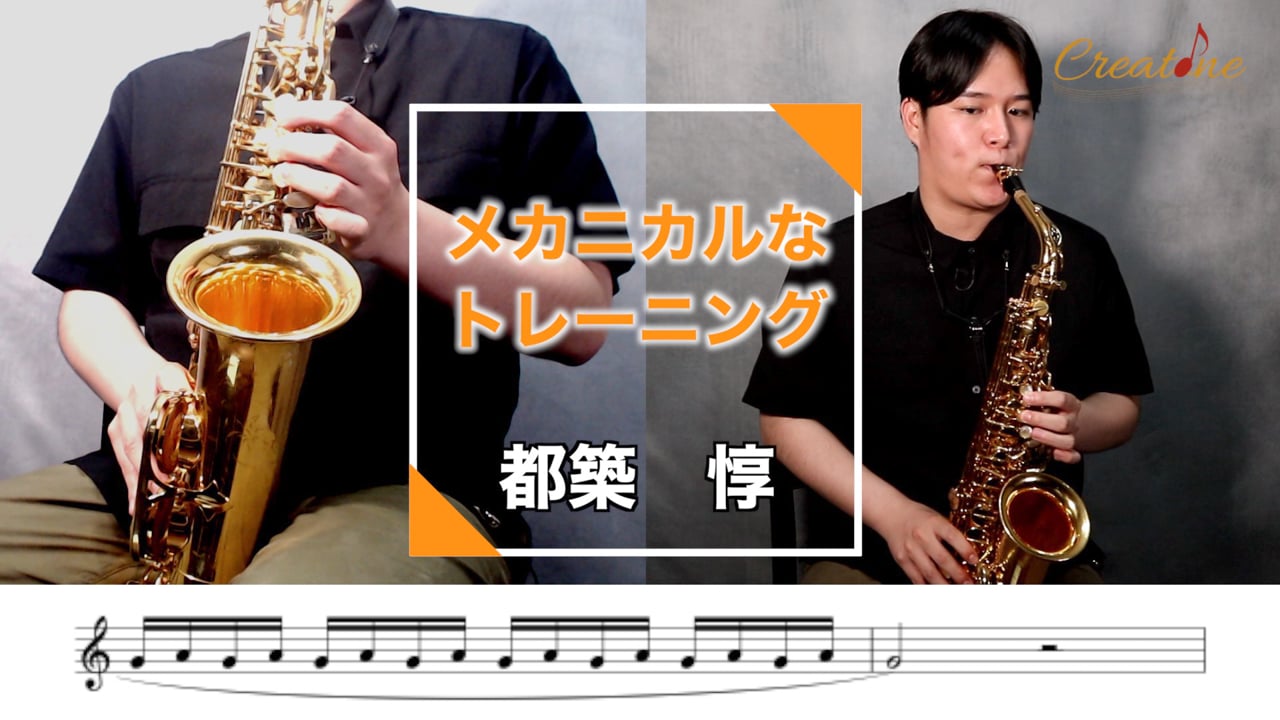
Why Your Fingers Get Tangled on Saxophone and How to Fix It: Dramatically Strengthen Your Ring Finger and Pinky with Two-Note Repetition Exercises
In saxophone performance, finger exercises are a crucial element that forms the foundation of technique. By training unstable fingers—especially the ring finger and pinky—through two-note repetition drills, you can achieve stable fingering. This guide explains a practice method that involves maintaining proper finger form while gradually increasing speed.

Flute Scale Practice: Achieving Consistent Tone and Finger Independence Across All Registers
Scale practice is the most essential and unavoidable foundation for any flutist. This lesson explains training methods for producing uniform tone quality across all scales and maintaining seamless sound even through difficult fingerings. By developing finger independence and fully synchronizing your breathing, you will build the groundwork to brilliantly execute fast passages in any piece.
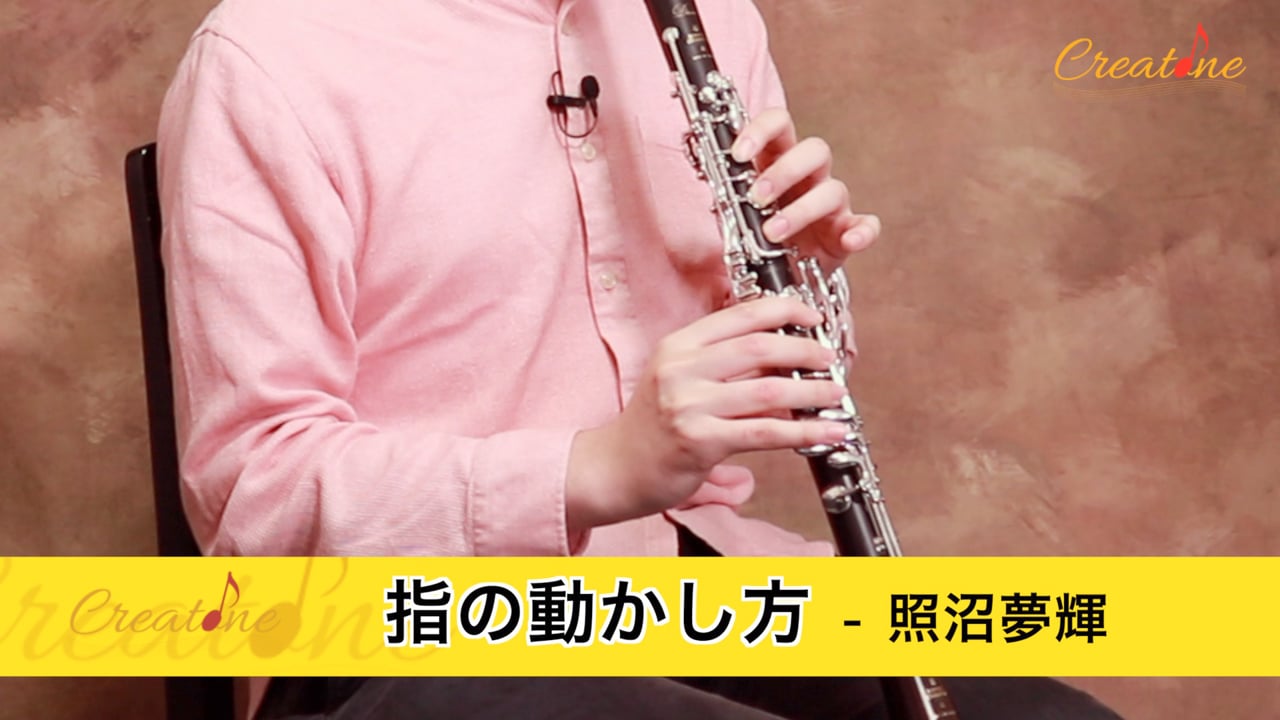
Clarinet Finger Technique: Octopus Fingering for Smooth Legato
In clarinet playing, finger technique is a crucial factor that determines the smoothness of your sound. When a clacking noise occurs at the moment you press the keys, it creates gaps between notes, making it impossible to achieve a beautiful legato. Regardless of finger height, by consciously moving your fingers softly at the moment of pressing, you can achieve smoother playing. This article provides a detailed explanation of the basics of clarinet finger technique, a soft finger movement method called Octopus Fingering, and how to apply it in practice when performing pieces where legato is essential.
![[Clarinet] Intonation That Blends in Ensemble: A Practical Method for Training Your Ear Without Relying on a Tuner](https://i.vimeocdn.com/video/1845712367-44c3261759d31b1b8ad3960147b9b302d357923f0f3ac9bd17e3005ee5008123-d_1280x720?&r=pad®ion=us)
[Clarinet] Intonation That Blends in Ensemble: A Practical Method for Training Your Ear Without Relying on a Tuner
In clarinet performance, intonation is an extremely important factor that determines ensemble quality. No matter how beautiful your tone may be, if your pitch deviates from those around you, the music falls apart. Since you cannot look at a tuner during a performance, the ability to judge pitch with your own ears is ultimately indispensable. This article provides a detailed explanation of efficient ear training using a drone and tuner together, practice methods for perceiving the resonance of intervals such as perfect fourths, perfect fifths, and major thirds (just intonation), and techniques for adjusting pitch through fingerings that account for the instrument's characteristics.

Breathing Techniques for a Refined Euphonium Tone
In euphonium performance, breathing technique greatly influences tone quality. By mastering breath timing that matches the character of the music and practicing methods to take high-quality breaths in short windows, you can achieve a more beautiful tone.

Steps to Refine Your Euphonium Tone: Setting Up and Forming for a Soft, Gentle Sound
The euphonium's greatest charm lies in its soft, gentle tone. However, producing this beautiful sound requires proper setup and form, as well as the right approach to the instrument. This article provides a detailed guide on the specific steps to refine your euphonium tone and key points for producing a soft, gentle sound.

Mastering Percussion Ensemble: Enhancing Expression with Triangle and Tambourine
Essential ensemble techniques for percussionists. From handling auxiliary percussion such as triangle and tambourine, to blending with wind and string instruments and synchronizing timing, this article addresses practical challenges in a Q&A format.

Mastering Trombone Slurs: Combining Legato Tonguing and Lip Slurs
Smooth slurs are considered the most challenging technique on the trombone. This article provides a detailed guide to combining legato tonguing and lip slurs to achieve seamless playing with no audible breaks between notes.
![[Saxophone] Staccato Practice Methods: A Q&A Guide to Mastering Two Techniques](https://i.vimeocdn.com/video/1845660663-586d5b90949dd8b7625007aecf3ca9ca0ba5fd0f6ea2e3bc12ce2761c19c22c7-d_1280x720?&r=pad®ion=us)
[Saxophone] Staccato Practice Methods: A Q&A Guide to Mastering Two Techniques
There are two types of staccato on the saxophone. The first method shortens the sound duration by keeping the tongue on the reed, making it ideal for consecutive staccato passages and fast tempos. The second method allows the tone to resonate, emphasizing clarity of articulation and the attack of each note. To increase staccato speed, it is essential to gradually raise the tempo using a metronome and maintain a fast air stream. This article provides a detailed Q&A guide covering the characteristics and effective practice methods for both types of staccato.

Trumpet Tonguing: How to Achieve Clear Articulation Through Proper Breath Support
Trumpet tonguing can achieve clear articulation not by striking with the tongue alone, but by coordinating your airflow. For fast tonguing practice, spoken exercises without the instrument are effective, using syllable combinations like "ta-ta-ta," "tu-tu-tu," and "ta-to-ta-to" to develop quicker single tonguing. By practicing no-tongue articulation and using the lip-generated "pu" sound to observe the direction of your airstream, you can develop proper tonguing technique with the image of briefly interrupting a stream of water (air) from a faucet with your finger (tongue).
![[Saxophone] Correct Posture and Center of Gravity: Form Design That Dramatically Transforms Your Playing](https://i.vimeocdn.com/video/1845664558-40682677d52fae368169c2f9239b213c8850c17abd88630a26af62b418065734-d_1280x720?&r=pad®ion=us)
[Saxophone] Correct Posture and Center of Gravity: Form Design That Dramatically Transforms Your Playing
If you are struggling with **saxophone** tone or control, start by re-examining how you sit. From distributing your weight onto your sit bones, to elbow angles and strap fine-tuning, this lesson explains the correct posture that minimizes fatigue and maximizes resonance.

Horn Warm-Up 1: Slurs and Tonguing Starting from F, Shaping the Airstream with Vowel Changes
Warm-Up 1 starts from F (the F on the first ledger line below the staff), the horn's reference pitch, and uses the momentum of your airstream to move notes up and down. Practice with both slurs and tonguing, and by imagining your vowel shape shifting from "foo" to "hee," you can regulate the speed and direction of your air into the upper register. This lesson covers tips for producing smooth tonguing that never interrupts the airflow.
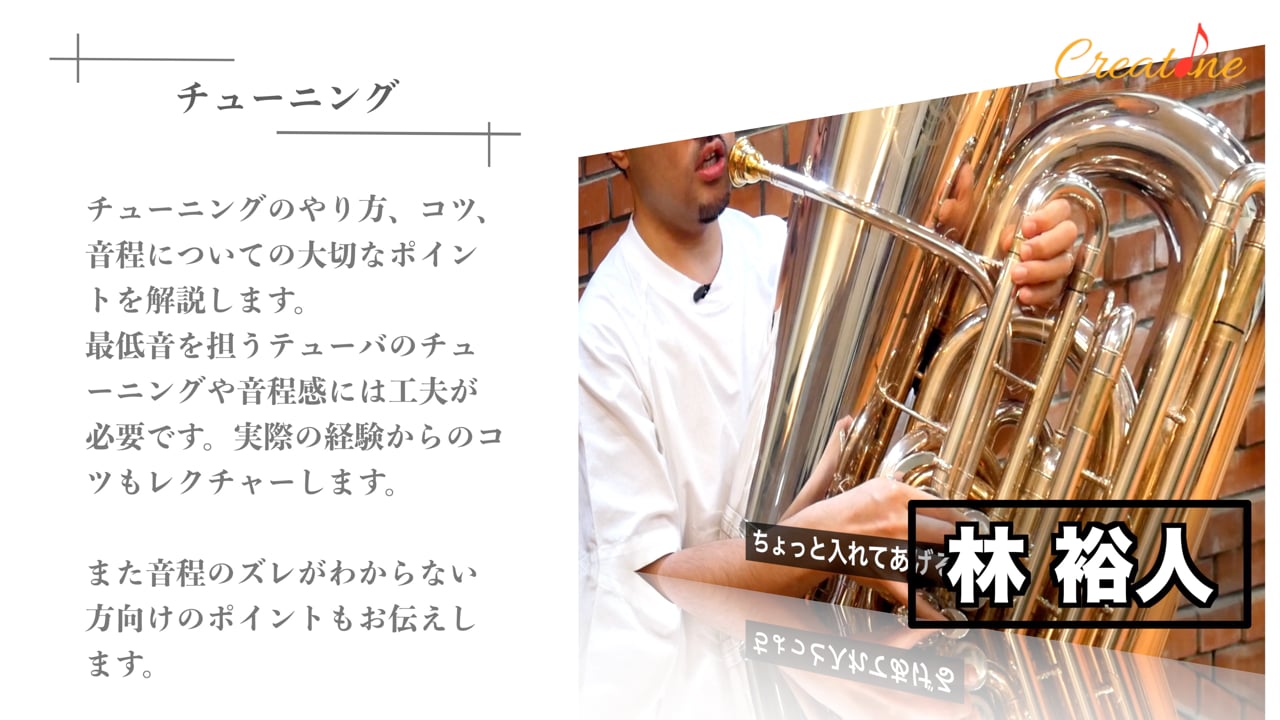
Mastering Tuba Tuning: Resonance Control for Building Rich Chords in Ensemble
The tuba is the foundation of the ensemble, and the accuracy of its intonation determines the overall quality of the sound. However, simply centering the needle on a tuner will not produce beautiful harmony. What tuning techniques are needed to feel the resonance with other instruments and fulfill your role within the chord? From first valve slide operation to addressing the pitch tendencies unique to the tuba, let us build an unwavering sense of intonation through this Q&A-style guide that will make you an immediate asset in ensemble playing.

A Guide to Improving Ensemble Skills for Bassoonists: The Art of "Empathy" and "Observation" That Creates Harmony
In an ensemble, the bassoon plays a vital role by supporting the overall sound from the low register. This article explains in detail how not only technical accuracy but also "empathy" and "powers of observation" among members can transform the quality of a performance. Packed with tips you can apply to your next rehearsal, from mastering the art of the Einsatz to positioning in a woodwind quintet, this guide will help you understand your instrument's characteristics and strive for a rich sound that blends seamlessly with those around you.
![[Horn] Key Points for Ensemble Playing: Differences in Awareness Between High and Low Horn Players](https://i.vimeocdn.com/video/1873101466-f125ad64ef8ee7d994f9bbc803569d351449ee999168b9425fe4bbb92f1ad532-d_1280x720?&r=pad®ion=us)
[Horn] Key Points for Ensemble Playing: Differences in Awareness Between High and Low Horn Players
In a horn ensemble, the awareness that each high and low horn player brings to their performance greatly influences the overall quality of the section. The 1st horn directs awareness outward, the 3rd horn supports the 1st while also maintaining outward awareness, and the 2nd and 4th horns each fulfill different roles in supporting the 1st horn. To synchronize timing, the ability to perceive the breathing and movements of neighboring players through both sight and sound is indispensable.
