



Eliminating Register Unevenness on Bassoon: Checkpoints for Playing Weissenborn No.7 Beautifully
In bassoon playing, notes respond differently depending on the register, making unevenness a common issue. In pieces like Weissenborn No.7, it is essential to minimize register unevenness and align rhythmic weight and airflow. This article organizes checkpoints and practice steps to build a foundation for stable, beautiful playing.
![[Saxophone] Breathing Techniques for a Richer Tone: Transforming Your Sound with Natural Airflow](https://i.vimeocdn.com/video/1845338598-3d97500d5f0d86ca8090795282b7e1e03ba02aa3632ce26d3cb00f335cb7431e-d_1280x720?&r=pad®ion=us)
[Saxophone] Breathing Techniques for a Richer Tone: Transforming Your Sound with Natural Airflow
In saxophone performance, the way you direct your breath is one of the most critical factors in determining tone quality. By focusing on the natural flow of your breath and developing the sensation of becoming one continuous tube from your abdomen to the instrument, you can produce a resonant, rich sound. By understanding the importance of not constricting your throat and the impact that posture and strap height have on airflow, you can fundamentally improve your saxophone tone.

Horn Orchestral Excerpt (Mahler Symphony No. 3, 1st Movement): Show Your Musicianship Through Phrasing Before Nailing the Octaves
The horn part in the 1st movement of Mahler's Symphony No. 3 is judged primarily on the long solo and octave accuracy. However, in auditions, the real difference-maker is whether you can convince the panel you are a strong player before the octaves even arrive. Treat espressivo with restraint in keeping with the German idiom, bring out the singing quality from the triplet figures onward, and use alternate fingerings on a push-Bb horn to create a smooth, connected line.

Steps to Refine Your Trumpet Tone
To refine your trumpet tone, warming up with lip slurs and tonguing exercises is essential. By developing flexibility through lip slurs and coordinating your fingers and tongue through tonguing exercises combined with scales, you can achieve stable and consistent performance.
![[Trumpet] Stabilizing Intonation: Projecting Sound Through the Bell and Practical Adjustment Techniques](https://i.vimeocdn.com/video/1845782912-2608e360fcffd4d71865e1cd23589ca9f6f7c68afb9a87f60df75578f834fbe9-d_1280x720?&r=pad®ion=us)
[Trumpet] Stabilizing Intonation: Projecting Sound Through the Bell and Practical Adjustment Techniques
Intonation is one of the most challenging aspects of trumpet playing, presenting a significant hurdle for many performers. The fundamental prerequisite for playing in tune is to produce sound correctly on the instrument — specifically, by imagining the sound projecting forward from the bell. By understanding that the trumpet is inherently an out-of-tune instrument and learning adjustment techniques suited to each register, you can achieve stable intonation. This article provides a detailed Q&A guide covering how to develop the concept of projecting sound from the bell, specific pitch adjustment methods, and tips for tuning in ensemble settings.

Euphonium Bending: An Expressive Technique for Changing Pitch Without Pistons
Euphonium bending is an expressive technique for shifting pitch without relying on pistons. By adjusting your embouchure and airflow, and supplementing with trigger and compensating system corrections as needed, you can add expression while maintaining accurate pitch and tone quality.
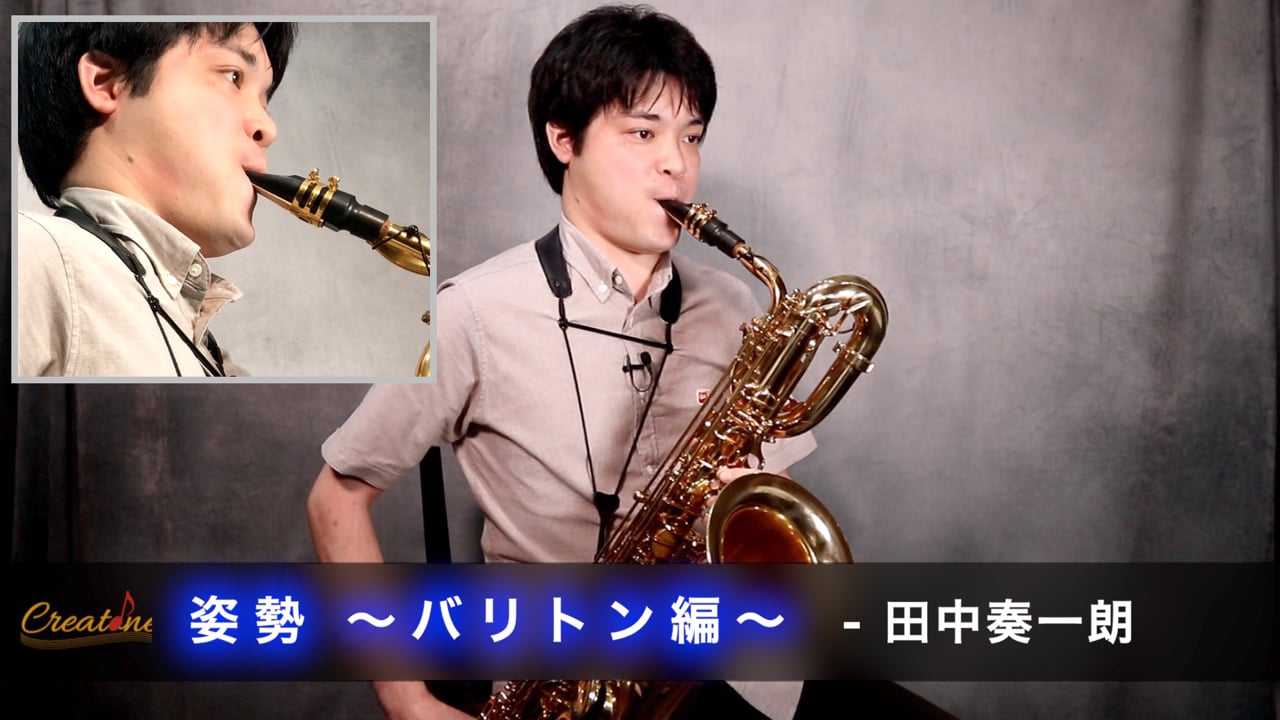
Saxophone Posture Fundamentals: Building a Stable Sound with Proper Baritone Saxophone Positioning
The baritone saxophone is a heavy instrument that can easily cause posture to deteriorate, directly affecting tone quality. Maintaining a relaxed, natural posture is fundamental, but care must be taken to avoid slouching, bending at the waist, or overcompensating by puffing out the chest. Keep your neck from jutting forward, and for your embouchure, firmly anchor your upper teeth on the mouthpiece so that the weight of your head rests on them. By slightly extending your jaw forward, you can facilitate the large volume of air required for the baritone saxophone. This article provides a detailed, step-by-step guide to posture checkpoints and practical positioning techniques.
![[Trombone] Building Fundamentals with Mouthpiece Practice: Effective Warm-Up Before Playing](https://i.vimeocdn.com/video/1872797194-b600d97c0214ea11b5d42b3de15f9ecee2e9ec8220e2e7a27ac06e5f891e458b-d_1280x720?&r=pad®ion=us)
[Trombone] Building Fundamentals with Mouthpiece Practice: Effective Warm-Up Before Playing
Practicing with just the mouthpiece before playing trombone allows you to check your embouchure and work on matching pitch. Using relaxed breathing and a non-tonguing approach, start with a single note and progress to lip slurs between two notes. This practice is highly effective as a warm-up before playing and, when incorporated into your daily routine, helps you build a solid trombone foundation.

Accent Expression in Percussion: Theory and Practice of Stroke Control for Creating Three-Dimensional Rhythm
In percussion performance, accents are the most familiar and essential articulation for breathing life into rhythm. However, simply 'hitting harder' results in a flat, unmusical performance. This article provides a detailed explanation of how to control stroke 'amplitude (height)' and 'speed' to make accents stand out. Learn specific percussion techniques for creating three-dimensional rhythm while maintaining consistency in non-accented notes.

Horn in Concert Band vs. Orchestra: The Orchestra Is All About Piano Dynamics — Insert the Right Hand Deeper for a Softer Tone and Align Your Attacks Early
The horn's role and challenges differ between concert band and orchestra. In an orchestra, there are many passages where the horn blends with woodwinds at piano dynamics, requiring careful attention. In concert band, where straight-bore brass instruments dominate and attacks are tightly synchronized, players tend to place their entries slightly early to avoid lagging. Additionally, in orchestral settings, inserting the right hand slightly deeper into the bell softens the tone, creating a color that blends well with woodwinds. This article covers a mindset for switching between these approaches depending on the situation.
![[Flute] Long Tones: Fundamentals and Practice for Mastering the Art of Sustaining a Straight Sound](https://i.vimeocdn.com/video/1872807579-dd9ecd97c288a3e1351af19ad393c3b24b3116d7fffaf676b45f58dbd8f00593-d_1280x720?&r=pad®ion=us)
[Flute] Long Tones: Fundamentals and Practice for Mastering the Art of Sustaining a Straight Sound
Long tones are the true foundation of flute fundamentals. The key is to sustain a straight sound, maintaining a consistent tone just like holding down a key on a keyboard. Pay close attention to how you start and end each note, making sure lower notes do not bleed through. At the advanced level, focus on phrase shaping (arched contour), imagining a flattened parabolic curve. Use lip angle and air direction to aim for a clean, pure sound. It is important to keep practicing even if some noise creeps in, and practicing across the full range from the lowest to the highest notes is recommended.
![[Saxophone] Mastering Slap Tonguing: Tips for Reed Pressure and Release](https://i.vimeocdn.com/video/1845701413-f7c936cab4de4a132cd2f884f508f7d7f0757aa4d54c2a4263dfd2142c9bde9c-d_1280x720?&r=pad®ion=us)
[Saxophone] Mastering Slap Tonguing: Tips for Reed Pressure and Release
The most important aspect of saxophone slap tonguing is how closely you can press your tongue against the reed. Practice is divided into three stages. First, without holding the instrument, practice pressing your tongue firmly against the roof of your mouth (behind the teeth) and releasing it immediately. Next, with the instrument, press your tongue firmly against the reed and release it all at once rather than letting it slide off gradually. Start by practicing without blowing air, then progress to slap tonguing while blowing air simultaneously, which will enable flexible slap tonguing across the entire range. This article explains slap tonguing practice methods and tips in a detailed Q&A format.
![[Flute] Alternate Fingerings for the Third Octave: Practical Techniques for Controlling Intonation and Volume](https://i.vimeocdn.com/video/1872813530-c743dc398a30a9743892d50eb977aa6cf8d3dbe4cf11da0221e6ac4edae5deac-d_1280x720?&r=pad®ion=us)
[Flute] Alternate Fingerings for the Third Octave: Practical Techniques for Controlling Intonation and Volume
Unlike the violin or piano, the flute is an instrument with irregular fingering patterns. The third octave tends to run sharp, and alternate fingerings play a crucial role when you want to produce a bigger sound or adjust intonation. This article provides a detailed Q&A-format guide to alternate fingerings for the third octave that work at forte, along with advanced techniques for fine-tuning pitch and shaping diminuendos.

Tips for Switching Between Clarinet and Bass Clarinet: Building a Stable Embouchure
When switching between clarinet and bass clarinet in an orchestra, your tone and playability can suddenly become unstable. This article explains how to verbalize mouthpiece depth and lower lip positioning to reduce inconsistencies when doubling.

Proper Finger Form for Bassoon: Reducing Strain and Achieving Smooth Fingering
Pain in your fingers or body while playing the bassoon may be caused by your form. This article explains how to distribute the instrument's weight using a strap and how to maintain a rounded hand position to prevent finger "locking." Learn to reduce physical strain and develop smooth technique.

Tuba Fundamentals Part 2: Practice Routines for Developing Tone Movement and Finding Your Daily Best
Tuba fundamentals begin with long tones, gradually incorporating tonal movement. By blending chromatic motion to activate the embouchure and performing scale exercises with slurs, you can verify whether you are accurately hitting your target notes and maintaining a beautiful tone quality. Through scale practice in all keys and the transition to lip slurs, finding your best condition each day forms the foundation of tuba performance.

Mastering Rose 32 Etudes No. 3 (Part 2) on Clarinet: Tips for Ornamental Notes and Rhythm Practice
When performing Rose 32 Etudes No. 3 (Part 2) on clarinet, you need to overcome various challenges including ornamentation from measure 18, thirty-second note practice, sextuplet rhythm exercises at measure 23, diminished seventh chord expression, largamente interpretation, fingering tips, and trill techniques. It is essential to first remove the ties from ornamental notes and practice slowly, mastering each note securely before gradually increasing the tempo one notch at a time. This article provides a detailed Q&A-format explanation of ornamental note practice methods, sextuplet rhythm exercises, diminished seventh chord expression, fingering tips, and trill techniques.
![[Saxophone] Master New Pieces Faster! How to Structure Efficient Practice and Design a Weekly Training Plan](https://i.vimeocdn.com/video/1845661640-8dee57eda0fb11873d6fbc6162c5511a9e2cfa7b51ad3a4ee36844bb04e3502f-d_1280x720?&r=pad®ion=us)
[Saxophone] Master New Pieces Faster! How to Structure Efficient Practice and Design a Weekly Training Plan
A step-by-step guide to streamlining your saxophone practice on new repertoire. From getting a rough overview of the piece, to conquering difficult passages with rhythm variations, understanding the accompaniment part, and researching historical context — this article systematizes the approach professionals use when learning new music. Includes a goal-oriented weekly practice menu to bring a piece into shape within one week.
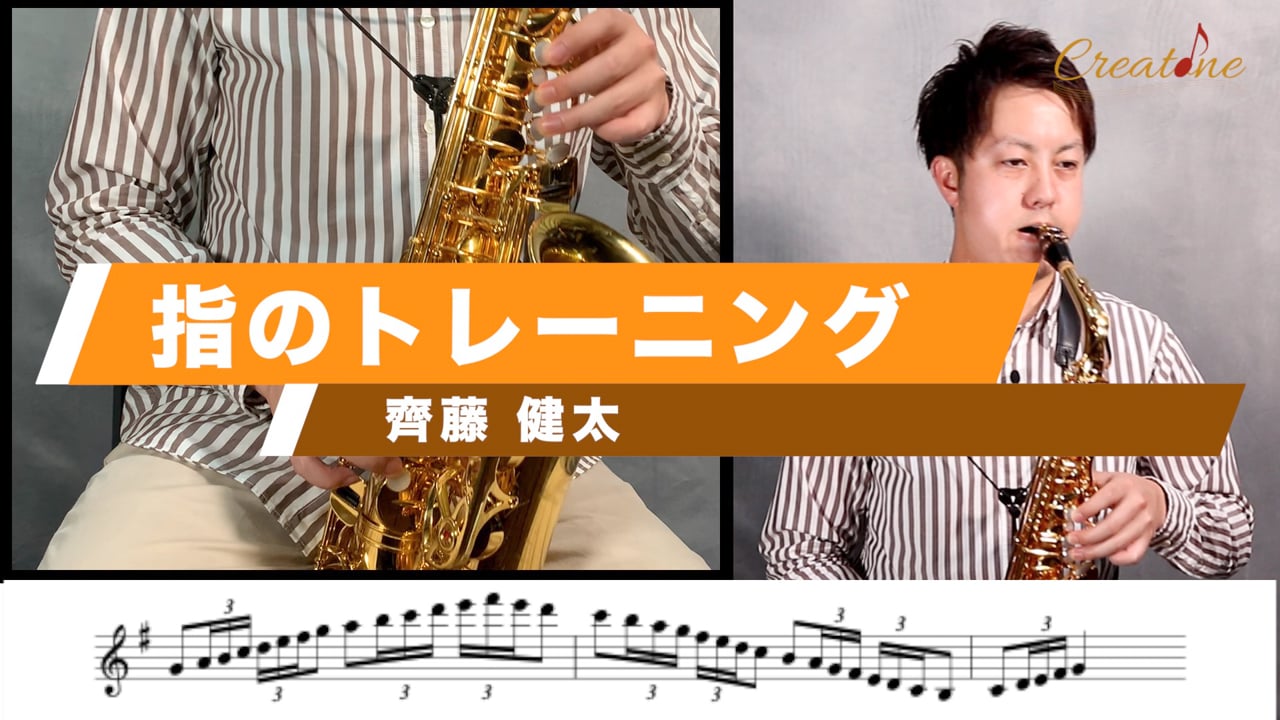
Saxophone Finger Training and Fast Passage Practice Methods
In saxophone performance, finger technique is a crucial element for technical improvement. By developing proper finger posture that keeps your fingers close to the keys and training to move them within a minimal range, you can efficiently improve your saxophone finger movement. Additionally, practicing with rhythm variations in a step-by-step approach is effective for playing fast passages accurately. This lesson explains saxophone finger training and fast passage practice methods by comparing incorrect and correct examples.

Percussion Accent Form Design: Advanced Coordination for Preparing the Next Stroke While Striking
Do you find your movements lagging or your rhythm falling apart when playing accents? In most cases, the root cause lies not in the strike itself but in the timing of your preparation. This article provides a detailed guide to efficient form design, where the motion for the next stroke begins simultaneously with the current strike. Through comparisons of poor and proper technique, we reveal the secrets of body mechanics that enable stable percussion performance even at fast tempos.
