



![[Clarinet] The Art of Articulation: Maintaining Air Pressure for Reed Control and Register-Specific Techniques](https://i.vimeocdn.com/video/1845658016-d4e7acb8b07e0e5533cfaecef646debe05b7b83d6e05e6efb65fdc3ead5e291d-d_1280x720?&r=pad®ion=us)
[Clarinet] The Art of Articulation: Maintaining Air Pressure for Reed Control and Register-Specific Techniques
To achieve a clean attack on the **clarinet**, maintaining air pressure while the tongue stops the reed is essential. This article provides a detailed explanation of how to differentiate tongue usage across registers, from low to high, and how to produce the ideal attack.
![[Trumpet] Maximizing the Quality of Home Practice: Steps to Develop Your Ideal Sound in a Limited Environment](https://i.vimeocdn.com/video/1872858533-9544c3c8b42f44ee866ec905f19d3ba373bd1b90d7079279ad03fa823f200ecf-d_1280x720?&r=pad®ion=us)
[Trumpet] Maximizing the Quality of Home Practice: Steps to Develop Your Ideal Sound in a Limited Environment
For trumpet players, practicing at home presents the real-world challenge of volume restrictions. Even if you can play freely at school, in a band, or in an orchestra, the reality is that noise concerns make it difficult to practice as you'd like at home. However, by choosing the right mute and practicing with a focus on the center of the tone, you can achieve effective practice that translates to real performance, even while muted.
![[Saxophone] Master Pitch Control! The Art of Intonation Correction with Alternate Fingerings](https://i.vimeocdn.com/video/1845330723-8ec0f053f3e454de158843fadd7d981d6305c412b198a73ce39867e36f0d3cab-d_1280x720?&r=pad®ion=us)
[Saxophone] Master Pitch Control! The Art of Intonation Correction with Alternate Fingerings
The saxophone is an instrument that is inherently prone to pitch instability. Attempting to correct intonation with the embouchure alone can alter your tone quality, but by utilizing alternate fingerings, you can achieve accurate pitch while maintaining a natural, rich sound. This article covers everything from low register corrections to high register decrescendo strategies, teaching you alternate fingering techniques as a "procedure for refining your tone" that will dramatically improve your saxophone performance.
![[Trombone] Resonating Through Harmony: A Q&A on Commanding the Brass Band Sound](https://i.vimeocdn.com/video/1872803638-4181c93f37e64ce73de0d6f47ad75e9fc1be68dac92d0d184c171a7d0722d12b-d_1280x720?&r=pad®ion=us)
[Trombone] Resonating Through Harmony: A Q&A on Commanding the Brass Band Sound
The trombone is distinguished by its unique slide mechanism, capable of producing comical sounds and powerful volume. However, the trombone was actually first used in churches, where it doubled the vocal parts in liturgical music, playing in unison with the choir. For this reason, the trombone is said to carry the voice of God in its sound. When the trombone section harmonizes well at the back of the ensemble, the entire brass band achieves a better sound. Because everyone plays while listening to the trombone's rich harmonies, the trombone is said to command the overall sound of the band. This article provides a detailed Q&A exploring the history and appeal of the trombone, as well as the importance of harmony exercises.

Flute Articulation and Tone Release: Refining the 'Attack' and 'Ending' That Shape Musical Expression
In flute performance, the onset (articulation) and release (resolution) of each note are critically important elements that define the refinement of your music. How do you eliminate the noise that creeps in at the moment of articulation, and how do you control the pitch and tone color at the instant a note fades away? This article provides a detailed guide to the techniques for eloquently 'speaking' each note through the precise coordination of breath control and subtle embouchure adjustments.
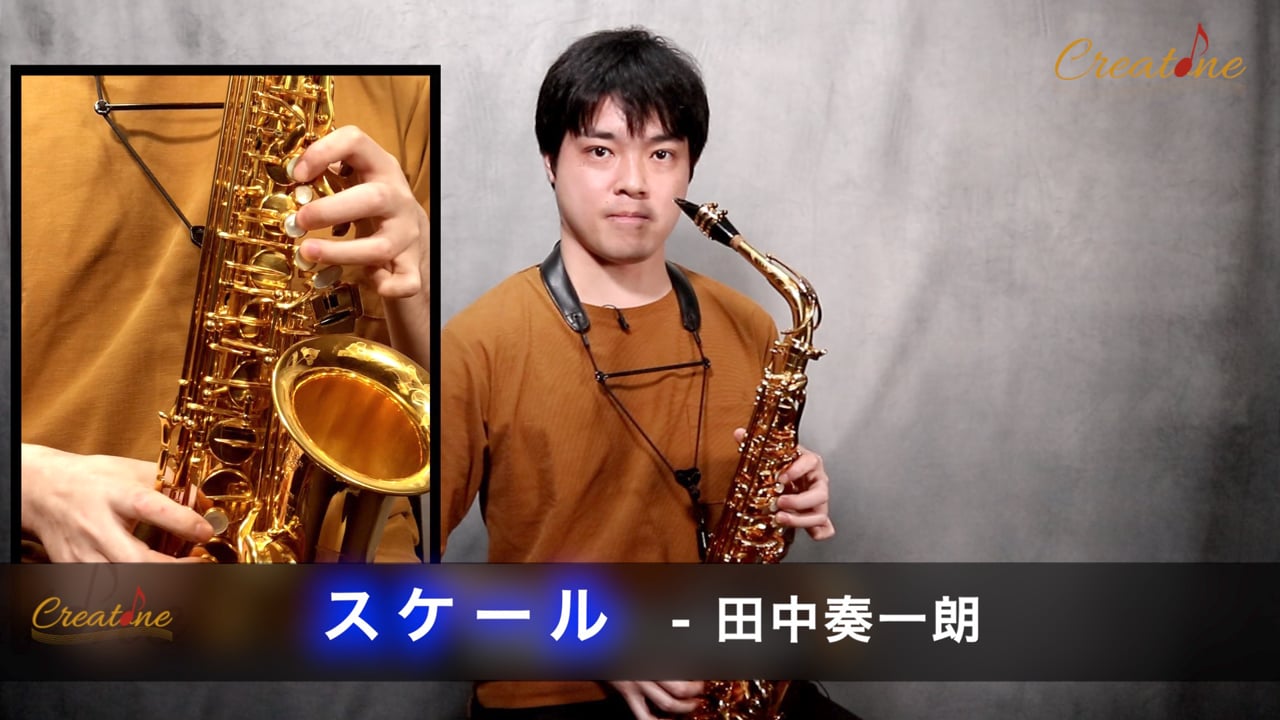
Mastering Saxophone Scale Practice: Tone Consistency Across All Registers and Three Articulation Techniques
Achieving a consistent tone across all registers is one of the most fundamental yet challenging aspects of saxophone scale practice. Learn how to solve common problems such as a thin tone in the upper register or a muffled tone in the lower register, and how to unify the three articulation techniques: slur, tonguing, and staccato.
![[Saxophone] On Breath: Achieving an Open, Resonant Sound Through Neck-Aligned Airflow and Warm Air](https://i.vimeocdn.com/video/1845679298-c5f70adce25a30f3f94e05106612b4e881dd80d8670db399ace8ed333bd455a9-d_1280x720?&r=pad®ion=us)
[Saxophone] On Breath: Achieving an Open, Resonant Sound Through Neck-Aligned Airflow and Warm Air
In saxophone playing, breath direction and quality are crucial elements that greatly influence tone. By directing your airflow along the neck and being mindful of using warm air, you can achieve an open, resonant sound that feels as though it breaks through the "back" of the neck and projects far into the distance. This article explains the correct breath direction for saxophone, how to produce warm air, and specific methods for creating an open, resonant tone.
![[Trombone] Tips for the Low Register: Steps to Eliminate Stuffiness and Carry Resonance Down](https://i.vimeocdn.com/video/1872801647-cdde07727fb0227de3706cae6eee28318f0eab9afaf1b7d9da12250529c02667-d_1280x720?&r=pad®ion=us)
[Trombone] Tips for the Low Register: Steps to Eliminate Stuffiness and Carry Resonance Down
If your trombone tone tends to sound "stuffy" in the low register, the solution is not simply blowing harder. You need to align your oral cavity space, aperture (the gap between the lips), and airflow. By consciously moving the jaw slightly forward as you descend, combined with glissando and lip slur exercises that move down in half steps, you can more easily carry the good resonance you create on your tuning B-flat all the way into the lower notes.

Mastering Long Tones on Horn: Practice Methods for Achieving a Rich Sound and Stable Breath Control
Long tone practice is essential for improving on the horn. Rather than simply sustaining a note, it is important to set clear objectives for each duration: a full, resonant sound at 4 beats, a steady tone without wavering at 8 beats, and sustained breath support at 16 beats. This article provides a detailed guide to dramatically improving your horn tone, covering everything from how to end a note to applied exercises incorporating crescendo and diminuendo.
![[Clarinet] From Concept to Feel: Practical Methods for Identifying and Developing Good Reeds](https://i.vimeocdn.com/video/1845658366-429913440e4d1c9f6a549b592b11a5b1beb8a65d2d8d485ecb00555f9f3adddd-d_1280x720?&r=pad®ion=us)
[Clarinet] From Concept to Feel: Practical Methods for Identifying and Developing Good Reeds
In clarinet playing, how you select and manage your reeds directly impacts your tone quality. Starting with understanding the concept of what makes a good reed, you can achieve stable performance by learning practical methods for selecting and developing reeds. This article covers everything clarinet players need to know, from visually identifying reeds, checking their responsiveness, to reed management and extending their lifespan.

Lip Trills on Horn: Use Your Embouchure When Fingers Fall Short. Build Whole-Tone Trills with Pressure Differences as a Smooth Line
Most trills can be played with the fingers, but on horn there are intervals where fingers alone are not enough. Lip trills are effective for whole-tone trills with large differences in oral cavity pressure, or in the upper register where moving the fingers barely changes the pitch. Drawing on the natural horn concept of changing notes with the embouchure when there are no valves, we organize when lip trills are needed and how to practice them.
![[Oboe] Reed Care and Maintenance: Proper Methods to Make Your Reeds Last Longer](https://i.vimeocdn.com/video/1845715767-4be05edf4c7b3e1253b23dbfcaba037aef7ed92cd8f21d051f4f9e32ca333a13-d_1280x720?&r=pad®ion=us)
[Oboe] Reed Care and Maintenance: Proper Methods to Make Your Reeds Last Longer
Oboe reeds are extremely delicate and will quickly deteriorate without proper care. This article provides a detailed Q&A guide covering how to handle debris trapped inside reeds, proper storage in reed cases, recommended soaking times, and tips for rotating reeds to extend their lifespan.
![[Unused] The Essence of Saxophone Performance: A Mindset for "Swallowing" and Playing the Instrument](https://i.vimeocdn.com/video/1845317866-d991c747d862fd3f4189149b6df0418891ced6a03c288a227bb1660d6ef62f1a-d_1280x720?&r=pad®ion=us)
[Unused] The Essence of Saxophone Performance: A Mindset for "Swallowing" and Playing the Instrument
When playing the saxophone, what matters even more than technique is the awareness of "how you relate to your instrument." This article explores the sensation of "swallowing the instrument" as envisioned by a professional player, and how the natural playability of Yamaha saxophones contributes to performance. Discover the mindset for cultivating a deep sense of unity with your instrument that transcends it being a mere tool.
![[Trombone] Three Pillars for Effortless High Notes: Air Acceleration, Tongue Position, and a "Downward" Angle](https://i.vimeocdn.com/video/1872843772-6d39fa0e20285caa907bde4893b8ae0f6b951935de526cd250f0682a803fc8f8-d_1280x720?&r=pad®ion=us)
[Trombone] Three Pillars for Effortless High Notes: Air Acceleration, Tongue Position, and a "Downward" Angle
The high register is an eternal challenge for trombone players. Rather than forcing notes out with tension, optimizing the oral cavity volume and air direction allows high notes to speak with remarkable efficiency. Here we explain three key techniques practiced by professional players.

Steps to Refine Your Clarinet Tone
To refine your clarinet tone, adjustments at three key points — between the barrel and upper joint, the upper and lower joints, and the bell — are essential. By tuning open G, balancing low C with the register key G, and finally adjusting B with the bell, while aligning the marks in a straight line, you can achieve accurate tuning.
![[Saxophone] Four-Beat Performance on Baritone Saxophone: Checkpoints for Swing and Breathing](https://i.vimeocdn.com/video/1845681477-5862be0ae14d9f89d00b913da6513bcde2c7aab3ee52c0963973d380baa0798d-d_1280x720?&r=pad®ion=us)
[Saxophone] Four-Beat Performance on Baritone Saxophone: Checkpoints for Swing and Breathing
When performing a four-beat bass line on **saxophone**, especially baritone saxophone, the driving force of the swing feel and the timing of breaths are crucial. This article provides a detailed guide to the checkpoints for performing a stable walking bass line.
![[Bassoon] Differentiating Articulation: A Step-by-Step Approach to Shaping Tone Through Imagery](https://i.vimeocdn.com/video/1845673248-dd3d57a27cf2c9b8b008b4ad59f2353b1c06684b51b472bc5259279e26185087-d_1280x720?&r=pad®ion=us)
[Bassoon] Differentiating Articulation: A Step-by-Step Approach to Shaping Tone Through Imagery
The key to refining bassoon articulation is to define the overall shape of the sound before obsessing over tongue details. This article organizes into clear steps the use of onomatopoeic imagery like TA/DA/PA, the difference between producing a thick bass line and keeping slurred staccato from bouncing too much, and the reverse-engineering mindset of planning from the endpoint backward.

Building a Career as a Bassoonist: The Importance of Deciding to Study Abroad and Taking Action
For bassoonists struggling with their future career path, studying abroad is one significant option. In this article, based on personal experience, the author details the inner conflict from aspiring to study abroad at age 20 to finally taking action at age 23, and how they overcame fears of an unfamiliar country and language. Practical advice is shared for carving out your future, including a "reverse-engineering approach" of writing down your ideal self on paper and utilizing masterclasses as a stepping stone before committing to study abroad.

Euphonium Articulation: The Expressive Spice That Brings Music to Life
In euphonium performance, articulation is the "final spice" that brings music to life. Techniques such as staccato, tenuto, and accent are seasonings that should be added after the "trunk" of note sequences and phrasing is established, and the expression changes dramatically depending on the character you set. This article explains the importance of articulation in euphonium playing and outlines specific steps for refining your tone.

A Trumpet Player's Approach to Music and the Path to Improvement
Refining your tone is one of the most important aspects of trumpet performance. By understanding your approach to music and its underlying philosophy, and by following practical steps, you can pursue a better trumpet tone. In this article, we share insights gained from experience as a trumpet player, along with concrete steps for refining your tone.
