



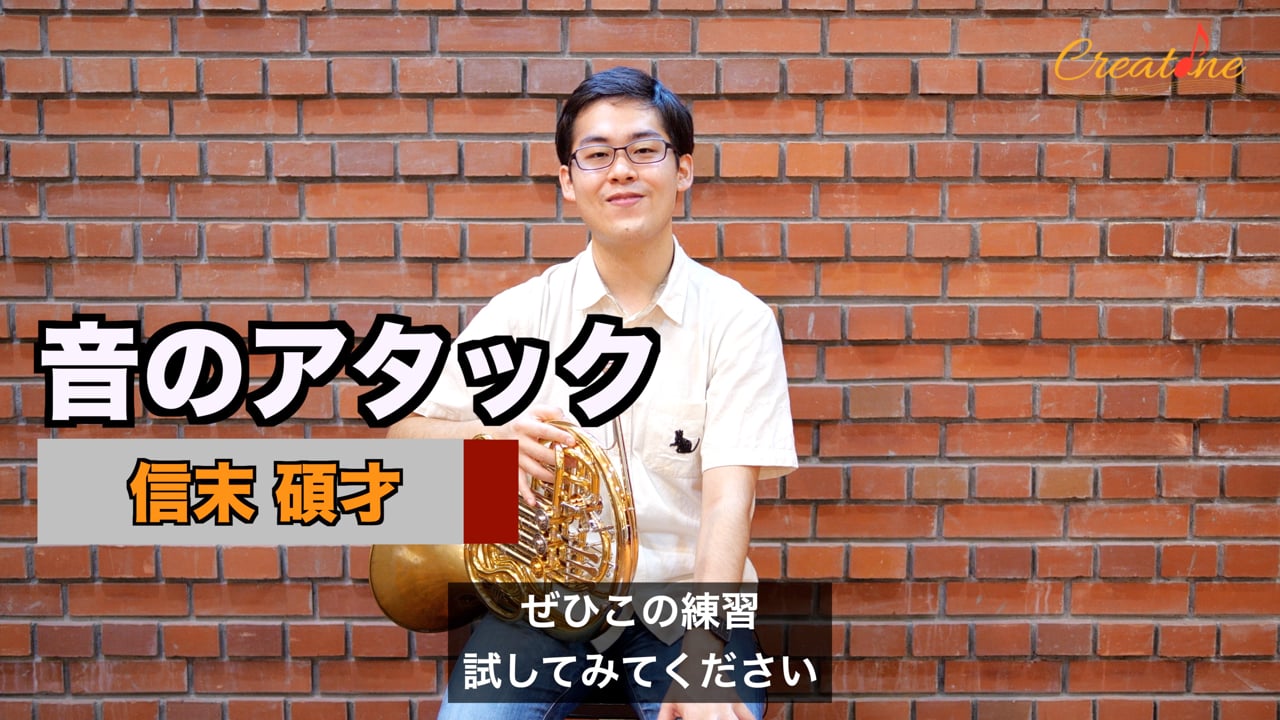
Mastering Horn Attacks: Improving Tone Onset with the Prepare-and-Release Technique and No-Attack Practice
The horn is an instrument often criticized for being inaudible or late, but the fundamental solution is not playing louder or faster—it is executing a solid attack. The attack refers to the onset of the tone, and because the horn projects sound backward, articulation must be clearer than on other instruments. This article explains the complete process for mastering horn attacks, from the basic sensation of preparing and releasing, to shaping tone flow through no-attack practice, and finally combining the attack with the tone.

The Complete Guide to Bassoon Vibrato: Crafting a Rich Sound That Stirs Emotions
Vibrato adds depth and vitality to the bassoon's tone. Yet many players struggle with issues such as applying vibrato constantly without variation or producing an unnatural wobble by relying on the throat. This article provides a detailed explanation of how to create waves through dynamic fluctuation (forte and piano) using abdominal support, how to vary vibrato musically in response to emotional expression, and effective training methods using a metronome. Pursue your ideal resonance and dramatically elevate your expressive capabilities.

Mastering Lip Slurs on Horn: Techniques for Flexible Register Changes and Control
Lip slurs are an indispensable technique in horn playing. This article provides a detailed guide to horn-specific techniques, including air speed and angle in the upper register, and maintaining embouchure stability in the lower register. Build greater freedom of control through exercises that skip between notes of the harmonic series: C, E, and G.

Horn Fingerings (Fundamentals): Play C/B on the F Horn. Avoid Using 1,3 or 1,2,3
Several notes on the horn tend to go flat when played on the B-flat side using trumpet-style fingerings. In particular, C (concert G on horn) and B (concert F-sharp) are more stable in both pitch and accuracy when based on F horn 0 or 2. The same principle applies in the upper register: avoid the 'lazy' B-flat horn 1 or 1,2, and learn to strategically use F horn 0 and B-flat horn 2 instead.
![[Horn] Mastering the Overture to 'The Barber of Seville': Practical Techniques for Expressive Performance](https://i.vimeocdn.com/video/1845770277-4f618ba0df738d677e96ab236175f4c3a28d7e1810a6dd2c7c83202178361272-d_1280x720?&r=pad®ion=us)
[Horn] Mastering the Overture to 'The Barber of Seville': Practical Techniques for Expressive Performance
The Overture to G. Rossini's opera 'The Barber of Seville' is a crucial piece that frequently appears in horn orchestral excerpts and auditions. The key lies not in simply playing what is written on the page, but in how you express a sense of 'forward direction' and 'bouncing nuance.' Incorporating the latest performance trends, we share specific playing tips to help you stand out at auditions.
![[Saxophone] Vibrato Fundamentals: Jaw Technique and Practice Methods for Creating Beautiful Oscillation](https://i.vimeocdn.com/video/1845666040-908c0d3c096e6ec26f069aa821e6078af22deed504ab61ee4dea06d53ed18875-d_1280x720?&r=pad®ion=us)
[Saxophone] Vibrato Fundamentals: Jaw Technique and Practice Methods for Creating Beautiful Oscillation
Vibrato adds rich expression to saxophone performance. This article clearly explains the mechanics of jaw movement and specific rhythm exercises for producing even, controlled oscillation.

Legato Tonguing on Trombone: Solutions for Playing Smooth Melodies
Legato tonguing is essential for connecting melodies smoothly on the trombone. How do you articulate softly at the exact moment the slide moves? This article offers a problem-solving approach to eliminating unwanted portamento and perfectly synchronizing slide movement with tongue coordination.

Mastering Phrase Construction on the Bassoon: Exploring Musical Expression Through Milde's Etudes
Milde's 25 Etudes are an essential part of bassoon study, yet many players get stuck in mechanical finger exercises. This article explains how to elevate these etudes into genuine musical expression, covering how to shape natural phrase contours, the importance of committing to the very first note, coordinating difficult fingerings with airflow, and rethinking staccato technique -- all as concrete strategies for creating richer music on the bassoon.

Horn Stopped Tone: Create Pitch by 'Sealing' the Bell, Not Just 'Inserting' Your Hand
In horn gestopft (hand stopping), the right hand must fully 'seal' the bell rather than simply being 'inserted' into it -- this is what determines pitch and tone color. If gaps remain, the intended stopped tone will not sound correctly, and players tend to start searching for the right pitch with different fingerings. Seal the bell until no metal is visible on the other side, keep the thumb extended rather than folded, use the fingering a half step above the target note, and default to the F horn. This article covers the fundamentals of stopped horn technique.
![[Clarinet] Proper Assembly Techniques to Protect Your Instrument for Life: A Complete Guide to Preventing Key Damage](https://i.vimeocdn.com/video/1873193991-239eb6732d32ff34879bb68f4c5d21c612849575ea95889c84f36c2500f55e0c-d_1280x720?&r=pad®ion=us)
[Clarinet] Proper Assembly Techniques to Protect Your Instrument for Life: A Complete Guide to Preventing Key Damage
Assembling a clarinet is far more than a simple preparatory task. Large instruments like the bass clarinet have complex and extremely delicate key mechanisms. Improper assembly can lead to bent keys, malfunctioning mechanisms, and even costly repairs. This article provides a detailed guide on the correct sequence for safely assembling your clarinet and the essential tips for preventing damage.

Right Hand Position on Horn: Establishing the Foundation for Pitch and Tone
The horn is the only brass instrument where the right hand is placed inside the bell, and the position of the right hand directly affects pitch, tone color, and resonance stability. Inserting the hand too far raises the pitch while darkening the tone; withdrawing it too much brightens the tone but destabilizes the pitch. This article explains how to establish a reference point by aligning the area between the first and second knuckles of your index finger with the bell ring, then adjusting your tuning from there.

Tuba Fundamentals 3: Improving Technique with Method Books and Mastering Legato
In tuba fundamental practice, it is important to use method books that incorporate the techniques of world-renowned players and to address personal challenges such as low register playing and articulation. To overcome the difficulties of valve operation unique to large instruments, begin by building an airflow foundation without tonguing, and work toward evenness of pitch through legato chromatic scale exercises. By gradually adding tonguing, you can develop beautiful articulation and smooth valve technique.

Horn High Register: Minimize Mouthpiece Pressure, Focus on Oral Cavity Changes. Use Crescendo to Support Air Speed
The more you press the mouthpiece for high notes, the more your lips pull back and produce a thin, harsh tone, reducing musical conviction. The key player is the change in oral cavity pressure (shape), with air speed serving as secondary support through crescendo. Additionally, by practicing glissando with connecting notes in between, you link notes as a continuous line rather than point to point, stabilizing the path up to high F. Here is a summary of the approach to making high notes easier.
![[Saxophone] Expression Design for Etude No. 1: Counting Techniques and Tone Color Choices That Support a Relaxed Tempo](https://i.vimeocdn.com/video/2128638279-447254f06d633dbb16e05ce22b6dfe60906fe7f82d2c2a86d7628c6cab261e30-d_640x360?&r=pad®ion=us)
[Saxophone] Expression Design for Etude No. 1: Counting Techniques and Tone Color Choices That Support a Relaxed Tempo
Ferling's Etude No. 1 is an adagio work that tests the expressive capacity of the **saxophone**. From detailed counting in eighth-note subdivisions, to choosing the right "piano" tone color, to breath techniques that maintain phrase continuity, this lesson explains the specific form design needed to perform this masterpiece beautifully.

Mastering Double Tonguing on Bassoon: Foundations and Practice for Commanding Fast Passages
For bassoonists, the rapid tonguing demanded in works by Mozart, Mendelssohn, and others is one of the greatest technical challenges. This article offers a professional player's in-depth guide covering the fundamental concept of double tonguing, specific exercises for keeping the T and K articulations even, and how to extend the technique to triple tonguing. Learn the secrets to increasing speed while maintaining an ideal tone quality.
![[Trumpet] Steps to Refine Your Tone: Mastering Breath Control for the Ideal Sound](https://i.vimeocdn.com/video/1872855527-f088b3b5756c50e65111f7a64faf612294a94d1ac44a73ac9c2bdfa74b3ba065-d_1280x720?&r=pad®ion=us)
[Trumpet] Steps to Refine Your Tone: Mastering Breath Control for the Ideal Sound
The single greatest factor affecting trumpet tone quality lies in airflow and the body's control that supports it. This article covers step-by-step breathing exercises timed to a count, how to maintain the oral cavity space that produces a rich resonance, and efficient practice methods using tools such as a breath builder. From beginners to intermediate players, learn the essence of the fundamentals every trumpet player should work on daily, and strive for freer, richer musical expression.
![[Bassoon] The Art of Note Endings: A Checklist for Creating Seamless Gradations](https://i.vimeocdn.com/video/1845673361-b564793d2a833bcbdc67b26df994e6eb74288225238235239aeec110d4ba3a2f-d_1280x720?&r=pad®ion=us)
[Bassoon] The Art of Note Endings: A Checklist for Creating Seamless Gradations
For bassoonists, achieving beautiful note endings is an eternal challenge. This lesson teaches you how to control breath pressure and embouchure to create smooth gradations that fade seamlessly into silence, rather than cutting off abruptly.
![[Saxophone] Conquer Fast Passages! The Ultimate Guide to Mastering Rapid Note Sequences](https://i.vimeocdn.com/video/1845331501-add648e99e411c5321ae8d69f2eed88356ee122090456adfcea831c496d9e9c0-d_1280x720?&r=pad®ion=us)
[Saxophone] Conquer Fast Passages! The Ultimate Guide to Mastering Rapid Note Sequences
Fast passages (rapid note sequences) are one of the most challenging aspects of saxophone playing. Rather than blindly trying to play faster, "slow and steady" practice methods such as changing rhythms, dividing phrases, and practicing backward actually provide the fastest path to mastery. This article explains concrete steps for building reliable finger movement and achieving smooth, fluid passages.
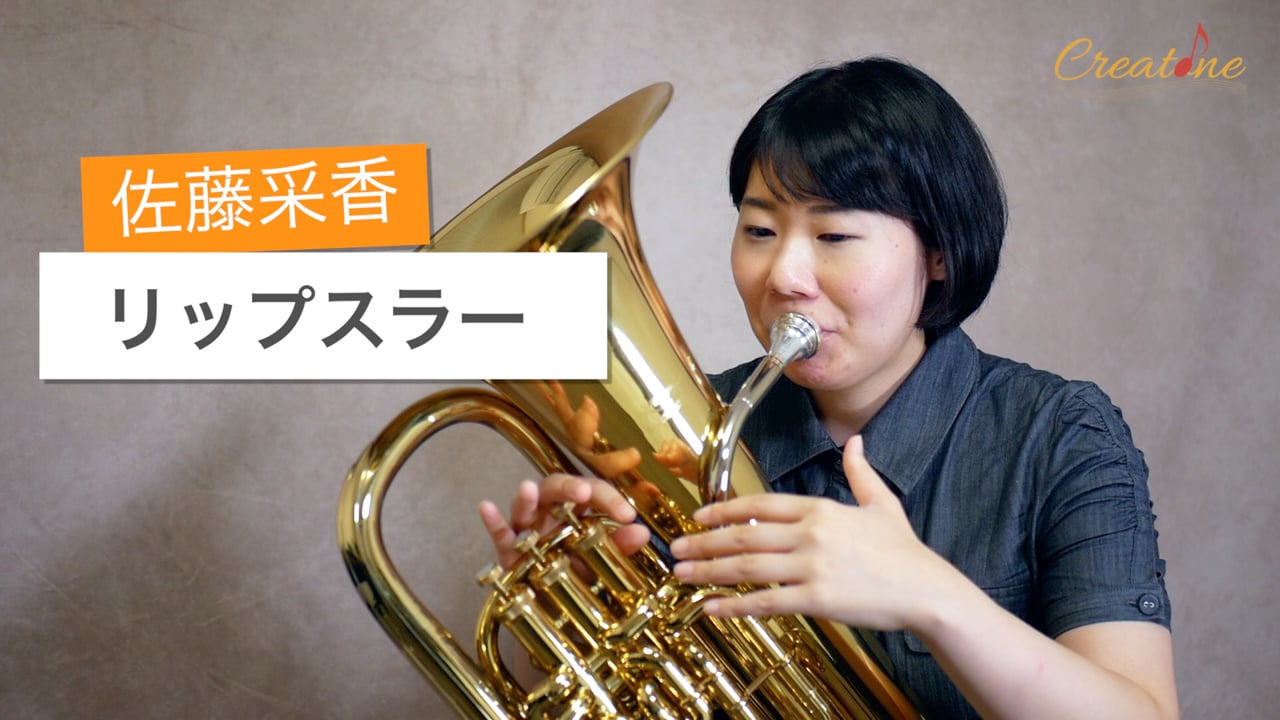
How to Improve Euphonium Lip Slurs: Clarify Your Target Note to Enhance Tone Quality
The reason euphonium lip slurs lack smooth transitions and produce unstable tone quality is that players fail to clearly visualize the target note. By defining your target and practicing while imagining the desired tone quality, you can achieve stable performance of descending patterns such as B-flat to F to B-flat, as well as ascending patterns.

Flute Tonguing Fundamentals: Building Clear Articulation Through Flexible Tongue Control
For flutists, tonguing is an indispensable technique that gives music rhythm and contour. Yet many players struggle with issues such as a blocked sound from overusing the tongue or uneven rhythm. By redefining the tongue's role from "stopping the sound" to "segmenting the airstream," this lesson presents a method for achieving clear, supple articulation while preserving the pure, resonant tone unique to the flute.
