



![[Oboe] Refining Your Tone with Reed Practice: A Practical Guide from Basics to Application](https://i.vimeocdn.com/video/1845714404-4b28559da3fee3fad095989866ce62269110955bafc80d5f555735bc1ff607b7-d_1280x720?&r=pad®ion=us)
[Oboe] Refining Your Tone with Reed Practice: A Practical Guide from Basics to Application
To refine your oboe tone, practicing on the reed alone forms the foundation. By learning practical steps for improving reed control -- from how to hold the reed, to 8-beat sustained tones and short articulation exercises, to pitch variation drills -- you will be able to play more easily when you pick up the oboe.

Logical Mastery of All-Key Scales on Tuba: Bridging Fingerings from Concept to Physical Intuition
Scale practice on tuba is far more than a finger exercise. By achieving a uniform tone and attack across all keys and developing a physical understanding of piston mechanics, you can dramatically expand your freedom of expression. This lesson provides a thorough guide from conceptual organization to building concrete physical intuition.
![[Trumpet] The Essence of Staccato and Tenuto: A Q&A on Controlling the Space Between Notes](https://i.vimeocdn.com/video/1845782441-9d9e3f0127ed1f2f38e18043df2b2645c5d010d47c920eb4240d5359f9be673a-d_1280x720?&r=pad®ion=us)
[Trumpet] The Essence of Staccato and Tenuto: A Q&A on Controlling the Space Between Notes
In trumpet articulation, staccato and tenuto are essential expressive techniques. Rather than the common understanding of staccato as "cutting notes short," its true meaning is "separating one note from another." Whether it appears on eighth notes or half notes, any time there is a gap between notes, it can be considered staccato. Tenuto means "to sustain the note fully," but when performing in a large concert hall, leaving a very slight gap between notes helps the audience clearly perceive that you are playing tenuto. This article provides a detailed Q&A-format explanation of the true meaning of staccato and tenuto, how to express them in large halls, and how to practice by alternating between staccato and tenuto.

Clarinet Embouchure: Building a Stable Foundation That Holds Up When Doubling
The bass clarinet's wide resonance makes it prone to tonal and pitch instability from excessive biting or embouchure shifts. By establishing a fixed clarinet embouchure and creating a reliable reference point, you can stabilize your articulation and intonation even when doubling between instruments.
![[Saxophone] Mastering the Growl Technique: A Q&A on Perfecting Expression Through Voice and Air Pressure](https://i.vimeocdn.com/video/1845662828-b338642e769c7e2a1cdf7f37070c259c59084f4c9996070988a9d7ca666a8c73-d_1280x720?&r=pad®ion=us)
[Saxophone] Mastering the Growl Technique: A Q&A on Perfecting Expression Through Voice and Air Pressure
The saxophone growl technique is an advanced method that creates unique expressiveness by vocalizing while playing. By increasing air pressure and using roughly twice the usual amount of air, you can achieve a deep tone that cannot be produced through standard playing. The growl technique sounds particularly striking when performed at augmented third and diminished fourth intervals. This article provides a detailed Q&A covering everything from the basics of the growl technique to solutions for common issues such as difficulty producing sound and running out of breath.

Saxophone Tonguing Practice: A Practical Approach Using Scales
Scale-based practice is an effective method for improving fundamental saxophone tonguing technique. By understanding the difference between tenuto and staccato and maintaining a consistent airflow using long tones as a reference, you can enhance both tonal consistency and expressiveness. This article provides a detailed guide from the basics of saxophone tonguing practice to practical methods using scales.

Advanced Saxophone Vibrato: The Art of "Variation" and "Non-Vibrato" That Brings Music to Life
Vibrato is not something you simply apply continuously. Discover the profound philosophy of a professional who says, "Non-vibrato is the ultimate vibrato." By adjusting the speed and depth of your vibrato waves to match emotions such as joy and sorrow, and by sometimes choosing not to use vibrato at all, this lesson teaches you the mindset for maximizing the expressive potential of the saxophone.
![[Horn] From Fundamental Concepts to Physical Awareness: How Posture and Right Hand Position Achieve Sound Projection](https://i.vimeocdn.com/video/1873079233-eeb63f16a297ba64069807c2b353d7c72ee00379ad283ac8ddb041d91fe6cf5e-d_1280x720?&r=pad®ion=us)
[Horn] From Fundamental Concepts to Physical Awareness: How Posture and Right Hand Position Achieve Sound Projection
In horn playing, posture and right hand position are critical elements directly linked to sound projection and tone quality. By understanding the concept of natural posture when holding this heavy instrument and experiencing the correct method of placing your right hand in the bell, you can resolve issues such as muffled or inaudible sound and achieve a resonant performance. This article covers everything from the basic way to hold the horn to how right hand placement and elbow position affect your sound, taking an approach that moves from concept to physical awareness.
![[Saxophone] From Concept to Physical Sensation in Daily Training: Integrating Articulation, Vibrato, and Scales into a Unified Practice Routine](https://i.vimeocdn.com/video/1845661578-ca74e66a4810b10fea8d06a9e75a5e0bc0365e0483689ec2d91f94b29eb6b39d-d_1280x720?&r=pad®ion=us)
[Saxophone] From Concept to Physical Sensation in Daily Training: Integrating Articulation, Vibrato, and Scales into a Unified Practice Routine
This lesson provides a detailed guide on daily training to elevate your saxophone playing. From articulation (half-tonguing), vibrato, and scales to effective metronome use, it explains how to transform conceptual understanding into real physical sensation. Discover the steps to turn your daily fundamentals practice into a creative process for aligning your ideal tone with your technique.

Stabilizing Intonation on Clarinet (Bass Clarinet): Fundamentals of Articulation and Air Pressure
Bass clarinet is prone to pitch instability, but by establishing proper articulation and air pressure control -- the fundamentals of clarinet playing -- you can achieve stable intonation. This lesson also covers small adjustments you can use when fatigue sets in.
![[Saxophone] Mastering the Altissimo Register: Achieving High Notes Through Throat Control and a "Singing" Mindset](https://i.vimeocdn.com/video/1845666783-990de2bc3ff88176de58cd2ad1c1c705406c28937ad133d4acdd12ded811ea1a-d_1280x720?&r=pad®ion=us)
[Saxophone] Mastering the Altissimo Register: Achieving High Notes Through Throat Control and a "Singing" Mindset
Altissimo (the super-high register) dramatically expands your expressive range on the saxophone. Learn throat techniques and a unique practice method to solve common problems such as missed notes and harsh tone.
![[Saxophone] Mastering Embouchure: The "Thick Rubber Band" Imagery for Flexible Control](https://i.vimeocdn.com/video/1845664664-818cd182441f63bf64332cf9de90f1507aa7a44745d1acd94879018de955e651-d_1280x720?&r=pad®ion=us)
[Saxophone] Mastering Embouchure: The "Thick Rubber Band" Imagery for Flexible Control
Is your embouchure becoming rigid from trying too hard to lock it in place? By adopting a professional's imagery of a "thick rubber band," you can achieve flexible control and a stable tone. This article also covers self-check methods for building your ideal form.

Orchestral Excerpts for Horn (Mahler Symphony No. 9, 1st Movement): Don't Just Play the Notes — Master the 'Space' and Design
The horn part in the 1st movement of Mahler's Symphony No. 9 is easy to pass once you get all the notes in place, yet many players end up with a performance that 'doesn't sing from the score.' This lesson covers how to create space at forte-to-piano transitions by counting beats, how to build crescendos without rushing — keeping the piano dynamic sustained before building intensity — and tips for achieving an elegant sound by leaning into a falsetto-like tone quality.

Tuba Lip Vibration: How to Build Your Foundation with Mouthpiece Practice
Lip vibration, the foundation of tuba playing, begins with mouthpiece practice. By balancing airflow and lip vibration and developing accurate pitch awareness, you can produce a better sound when you pick up the instrument. Rather than neglecting mouthpiece practice, making it part of your daily warm-up routine is the fastest path to improvement.
![[Saxophone] Mastering the Upper Register of the Soprano Saxophone: The Mindset for Achieving a Unique Sound](https://i.vimeocdn.com/video/1845342607-ed25f14193503f21bd834a7212ad98a669318356fd9dace5e3d77c17cebe74e7-d_1280x720?&r=pad®ion=us)
[Saxophone] Mastering the Upper Register of the Soprano Saxophone: The Mindset for Achieving a Unique Sound
Many players feel uneasy about the upper register of the soprano saxophone. The moment you try to play, the note crashes downward or comes out thin and airy — this is because the upper register is an extremely delicate domain. In this article, we explore the causes of note dropout, pressure adjustment, and lateral support, all aimed at developing the mindset needed to master the soprano saxophone's upper register and achieve a truly unique sound.

Mastering Circular Breathing on Saxophone: 7 Steps to Freedom from Breath Constraints
Circular breathing can dramatically expand your saxophone performance capabilities. This article breaks down this challenging technique into 7 progressive steps for easy comprehension.
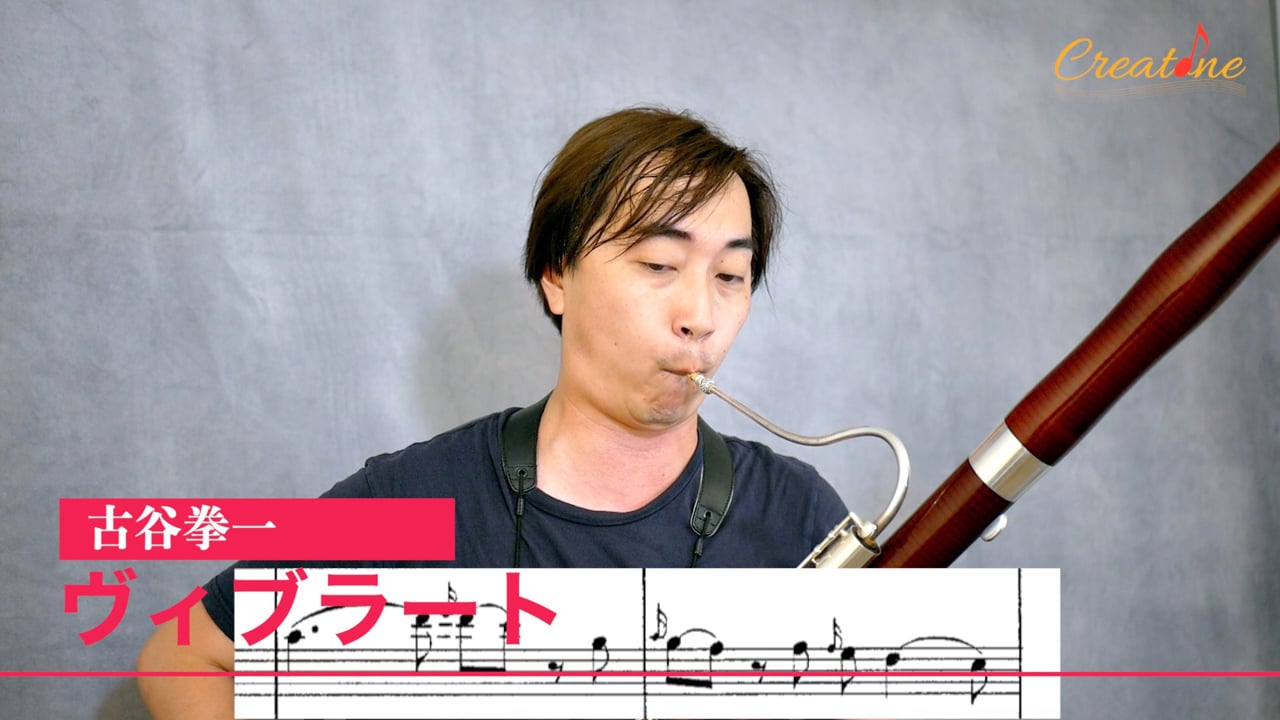
Mastering Bassoon Vibrato: Rich, Expressive Sound Produced from the Core
While the bassoon often serves an accompaniment role, vibrato is a crucial element that adds rich color to solos and melodies. This article covers the correct technique of producing vibrato from the abdomen, how to vary its use according to musical style, specific training methods to internalize the technique physically, and its close relationship with embouchure.
![[Clarinet] Mastering Embouchure: Improving Tone Quality Through Tongue Position and Air Direction](https://i.vimeocdn.com/video/1845657360-eacc4cf6313967b57fa27f937bf65381bdc7e7b53c264b31841797951be75834-d_1280x720?&r=pad®ion=us)
[Clarinet] Mastering Embouchure: Improving Tone Quality Through Tongue Position and Air Direction
Clarinet embouchure is a crucial element that determines tone quality. By properly controlling the details inside the mouth, particularly tongue position, jaw position, and air direction, you can achieve a stable tone and greater expressiveness. While approaches to tongue position vary among clarinetists, the fundamental principle is to be mindful of jaw position and control air direction. This article provides a detailed Q&A explanation covering embouchure fundamentals, the relationship between tongue and jaw position, methods for controlling air direction, and practical exercises.

Clarinet Staccato: The Technique of Stopping While Maintaining Air Pressure
Staccato is the alternation between stopping and releasing the airstream. Because the bass clarinet tends to respond slowly, the key is to maintain air pressure even while the tongue is stopping the reed. This lesson covers how to build a clean clarinet staccato, including why your articulation may sound like slap tonguing.

How to Develop a Mental Image of Sound for Trombone Improvement
When it comes to improving on the trombone, having a mental image of your ideal sound is even more important than technical practice. By listening to recordings of performers you admire and strongly visualizing their sound while you practice, you can begin producing tones you never thought possible. Musical expression also starts with imitation and builds from there.
